
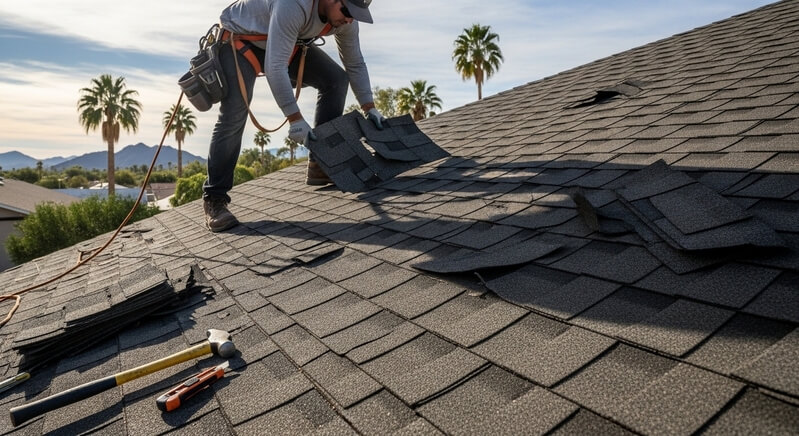
Blistering shingles happen when trapped moisture or gas beneath the shingle surface expands under heat, pushing up small raised bubbles that eventually crack — and in Arizona’s climate, where roof surfaces regularly hit extreme temperatures in direct summer sun, blistering shows up faster than it typically would in milder climates.
What causes shingle blistering
Blistering is fundamentally a trapped-moisture or trapped-gas problem beneath the shingle’s surface layer:
- Moisture trapped during manufacturing or installation. Small amounts of moisture sealed in during production or installed on a damp deck can expand and blister once the roof heats up in full sun.
- Poor attic ventilation. Excess heat and humidity trapped in the attic pushes upward into the shingle layer, contributing to blister formation from underneath.
- Manufacturing defects. Occasionally, blistering traces back to an inconsistency in the shingle itself rather than anything about the installation or climate.
- Prolonged intense heat exposure. Arizona’s summer roof surface temperatures accelerate the expansion process that causes blisters to form and eventually rupture.
Blistering often appears alongside other heat-related shingle wear — see our guide on granule loss on shingles, since a ruptured blister frequently accelerates granule loss in that same spot.
Noticed raised bubbles on your shingles?
Blistering vs. granule loss vs. curling
| Damage type | What it looks like | Primary cause |
|---|---|---|
| Blistering | Small raised bubbles, sometimes ruptured with a crater-like center | Trapped moisture or gas expanding under heat |
| Granule loss | Bald or thinning patches, granules visible in gutters | UV degradation and general wear over time |
| Curling | Edges lifting or turning upward | Aging shingles losing flexibility, often near end of lifespan |
Why blistered shingles are a real concern
A blister that ruptures exposes the shingle’s underlying layers, and once that protective surface is broken, that spot ages considerably faster than the surrounding shingle. Ruptured blisters also often coincide with accelerated granule loss right at that spot, since the raised, weakened surface sheds granules more easily than flat, intact shingle. Left alone, a cluster of ruptured blisters in the same area can turn into a legitimate weak point in the roof’s weather protection well before the rest of the roof shows comparable wear.
How to spot blistering early
- Small raised bumps across the shingle surface, most visible in direct afternoon light when shadows make the texture more obvious.
- Crater-like depressions where a blister has already ruptured, often with a slightly different color than the surrounding shingle.
- Clustering in specific areas rather than spread evenly, which can point to a localized ventilation issue beneath that section of roof.
How blistering actually gets addressed
- Assess how widespread it is. A handful of isolated blisters is a very different situation than blistering across large sections of the roof.
- Check attic ventilation. If poor ventilation is contributing, addressing that can prevent new blistering even if some existing shingles need replacement.
- Replace significantly affected shingles. Ruptured blisters that have already exposed the underlying layer are typically replaced rather than repaired in place, since the damage doesn’t self-heal.
Our shingle roof repair service handles both isolated blister replacement and, where ventilation is the underlying cause, coordinates fixes that prevent new blistering from forming in the same areas.
A real-world scenario
A homeowner in Gilbert noticed a cluster of small bumps on a south-facing section of roof that got the most direct summer sun. They assumed it was just normal wear and didn’t think much of it until a few of the bumps had visibly ruptured a season later. An inspection found the blistering was concentrated specifically in that section because of a gap in attic ventilation directly beneath it, trapping extra heat and moisture right there. Replacing the affected shingles alongside correcting the ventilation gap addressed both the visible damage and the underlying cause, preventing the same cluster from reforming.
Frequently asked questions
Are blistered shingles the same as hail damage?
No. Blistering comes from trapped moisture or gas expanding under heat, while hail damage typically shows as sharper impact marks or bruising. Both can look similar from a distance, so a close inspection helps tell them apart.
Can I ignore a few blisters if they haven’t ruptured yet?
Unruptured blisters are lower urgency, but they’re worth monitoring since they will eventually rupture under continued heat cycling. Getting them assessed before rupture is generally cheaper than waiting.
Does poor attic ventilation really cause shingle blistering?
Yes, it’s one of the more common contributing factors. Trapped heat and moisture in the attic pushes upward into the shingle layer from underneath, adding to the heat-driven expansion that causes blisters.
How much does it cost to fix blistered shingles?
It depends on how widespread the blistering is and whether ventilation correction is also needed. A small, isolated cluster costs far less to address than blistering spread across multiple roof sections.
Will blistering happen again after repair?
If the underlying cause (often ventilation) isn’t addressed alongside the shingle replacement, new blistering can form again in the same general area under continued heat exposure.
Is blistering more common on certain shingle colors?
Darker shingles absorb more heat and can run hotter than lighter colors, which can make them somewhat more prone to heat-related issues like blistering in intense sun exposure, though ventilation and moisture are still the primary drivers.
If you’ve spotted blistering, granule loss, or any other shingle wear, our shingle roof repair team can determine whether it’s isolated or points to a broader ventilation issue. See our guide on the best roofing material for Arizona heat if you’re weighing whether shingle is still the right fit for your home. Request a free inspection to get a clear answer.