
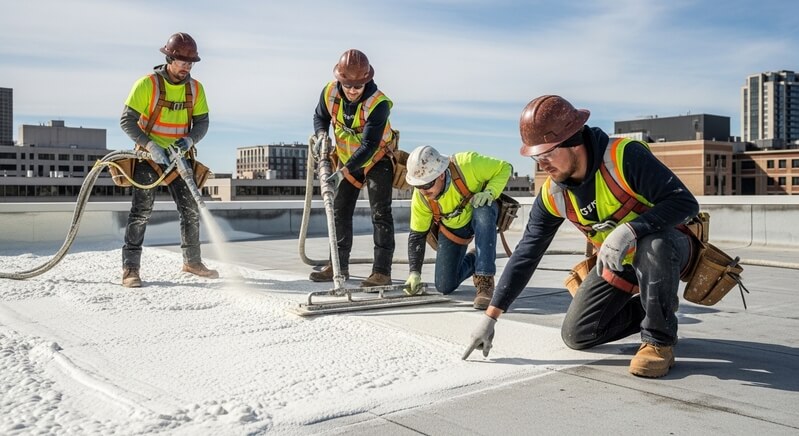
Foam Roof Repair & Recoating in Tempe, AZ
Spot repairs and full recoating for sprayed polyurethane foam roofs — built to handle Arizona's heat cycles, not just patched over.
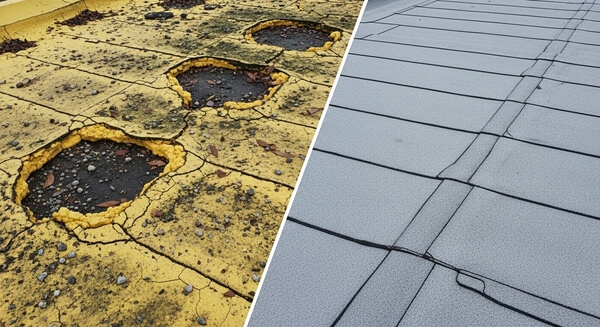
Foam roofs need maintenance the sun doesn't wait for
Sprayed polyurethane foam is a great flat-roof system for Arizona — lightweight, seamless, and a strong insulator, which is why it shows up on so many East Valley homes and additions instead of a traditional built-up or shingle system. But UV exposure breaks down the protective coating faster here than almost anywhere else, and once the coating fails, the foam underneath starts to crack and absorb water.
Roofers in our network handle both ends of foam roof maintenance: targeted spot repairs for isolated cracking or soft spots, and full recoats when the coating has worn thin across the roof — see the FAQ below for how to choose between silicone and acrylic coatings. Either way, the goal is catching it before water gets into the foam itself. Read more about how we work or check which East Valley cities we serve.
Get a foam roof quoteWhat worn foam coating looks like
Catch it before water gets into the foam itself.
Cracked or alligatored surface
A pattern of fine cracks across the coating means UV wear has set in.
Soft or spongy spots underfoot
Soft areas usually mean moisture has already gotten into the foam.
Fading, chalking coating
A powdery residue on your hand after touching the roof is a sign the coating is breaking down.
Rising summer cooling costs
Coating past its reflective life stops doing its job of keeping heat out.
From first call to a sealed, reflective roof
Four steps, no surprises along the way.
Free Inspection
A local roofer walks the roof, documents damage with photos, and explains what they see.

Written Estimate
A clear, itemized quote — no vague line items, no pressure to sign today.
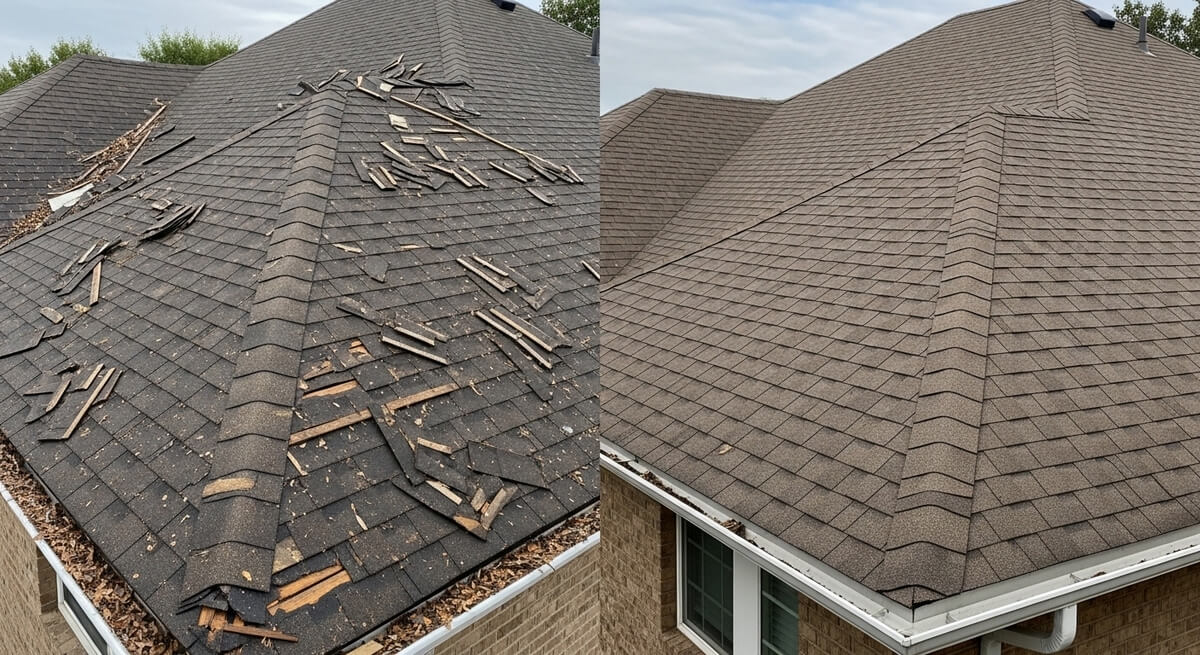
Repair
The contractor schedules the work directly with you and handles the job from start to finish.
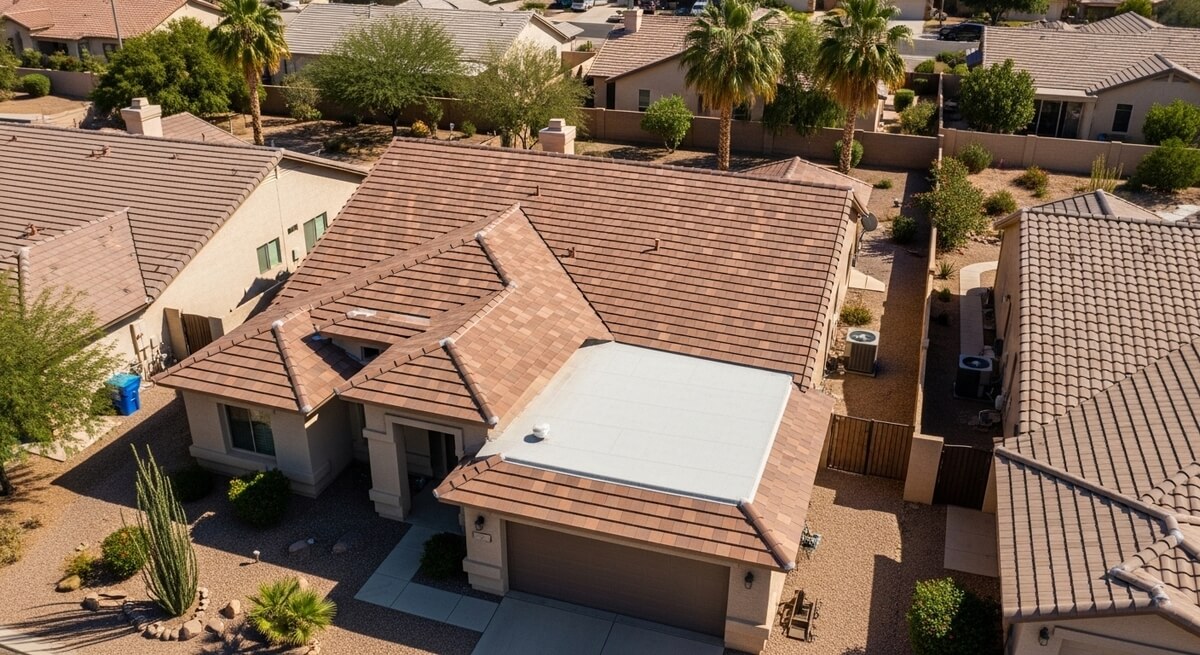
Final Inspection
Ask the roofer to walk the finished roof with you before the job is called done.

Other ways we can help
Spot repair, recoat or replace?
| Roof condition | Usual answer | Why |
|---|---|---|
| A few blisters, punctures or cracks | Spot repair | Damage is local and the rest of the coating is healthy |
| Chalky, thin coating across the roof | Full recoat | Restores UV protection before the foam itself is damaged |
| Soft, wet foam in several areas | Remove wet foam, repair, then recoat | Wet foam must come out before new coating goes on |
| Saturated foam over much of the roof | Foam roof replacement | Recoating over wet foam traps water and fails early |
What affects foam roof repair and recoat cost?
Every foam roof is priced after an inspection, but these are the factors that move the number.
- Roof size and access. Larger and harder-to-reach roofs take more material and labor.
- Coating type and thickness. Acrylic and silicone systems differ in price and in how they are recoated later.
- Prep work. Cleaning, cutting out blisters and filling damaged foam add to the job.
- Drainage fixes. Low spots that hold water need attention before a new coating.
Foam recoats and the SRP cool roof rebate
A reflective recoat on a low-slope foam roof can qualify for SRP's cool roof rebate, which pays 30 cents per square foot of roof coverage, up to $600, for qualifying products. It is worth asking about the rebate before choosing a coating, and confirming current terms with SRP.
Foam roof questions
How long does a foam roof coating last in Arizona?
A well-maintained foam roof with regular recoating can last 15-20+ years. UV exposure is the main factor that wears the coating down, which is why recoating on schedule matters here more than in milder climates.
Can you repair just a section, or does the whole roof need recoating?
Spot repairs work fine for isolated cracks or soft spots. If wear is widespread across the roof, a full recoat is usually more cost-effective than patching section by section.
Does foam roofing actually help with cooling costs?
Yes — a properly maintained reflective foam roof reduces heat transfer into the building, which is one of the reasons it's popular on Arizona flat roofs.
Silicone or acrylic coating — which is better for a Tempe foam roof?
Silicone holds up better against ponding water and won't break down as fast under intense, direct UV, which makes it the stronger choice for most Tempe roofs. Acrylic costs less upfront and recoats easily, but it softens under prolonged ponding and needs more frequent maintenance in our climate. The right one depends on your roof's slope, drainage, and how long you plan to stay in the property.
Can I walk on my foam roof?
Light foot traffic is fine on a healthy coating, but repeated traffic wears it down. Walk pads around rooftop equipment help protect the surface.
Do birds damage foam roofs?
Yes. Birds sometimes peck at exposed foam. Keeping the coating intact and repairing pecked areas quickly prevents water from getting into the foam.
Foam coating looking worn?
Catch it with a spot repair before it needs a full recoat.