
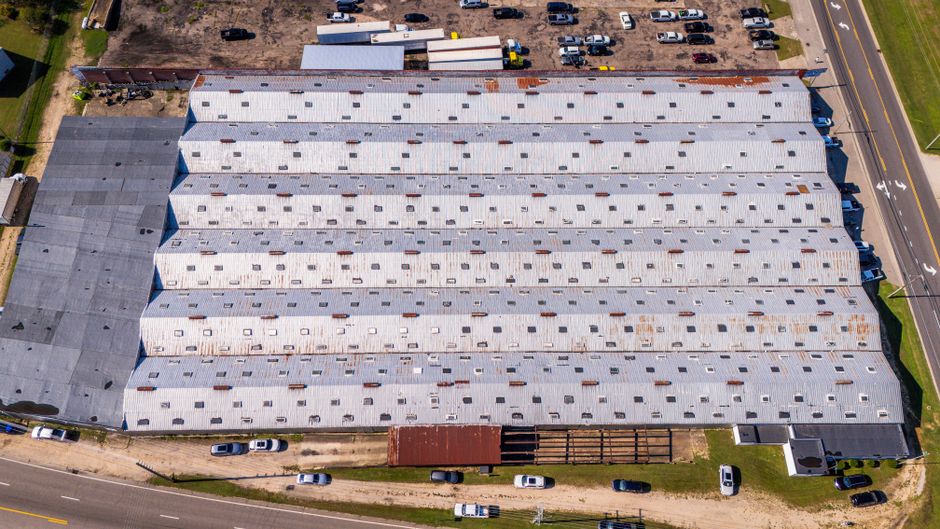
Ponding water on a flat roof — standing water that hasn’t drained within 48 hours after rain — happens when the roof’s slope, drains, or membrane can no longer move water off efficiently, and it’s worth fixing quickly because standing water accelerates membrane breakdown far faster than normal weathering does.
What causes ponding water
Flat and low-slope roofs are never perfectly flat — they’re built with a slight intentional slope toward drains. Ponding shows up when that drainage path stops working as designed:
- Clogged or undersized drains. Debris, dust, and monsoon storm runoff can block roof drains and scuppers faster than many owners expect.
- Roof deck settling over time. Structural settling, especially on older commercial buildings, can create low spots that weren’t there when the roof was installed.
- Insufficient original slope. Some flat roofs were built with too little slope to begin with, leading to chronic ponding in the same spots after every rain.
- Membrane sagging between structural supports. Over time, the membrane itself can sag slightly between roof deck panels, creating shallow low points.
If you’ve noticed ponding alongside other issues, see our guide on attic mold causes and risks, since prolonged ponding can eventually contribute to moisture problems below the roof deck too.
Standing water that won’t drain?
Why ponding water is a real problem, not just cosmetic
Standing water adds significant weight to a roof structure and keeps the membrane constantly wet, which accelerates UV and chemical breakdown of the roofing material far faster than a roof that dries out normally between storms. Ponding water also makes it much harder to spot small membrane punctures or seam failures, since they’re hidden underwater until the leak actually shows up inside the building. In Arizona specifically, ponding combined with intense summer heat can also promote algae and debris buildup that further damages the membrane surface.
The 48-hour rule
Most roofing standards use 48 hours as the line between “normal drainage” and “a ponding problem.” A little water sitting for a few hours after a storm is expected on any low-slope roof. Water still standing 48+ hours after rain has stopped points to an actual drainage issue that needs attention rather than just weather.
How ponding water actually gets fixed
- Clear and inspect drains first. Sometimes ponding is simply a clogged drain, and clearing it resolves the issue immediately without any roofing work at all.
- Assess the extent and depth of ponding. A professional inspection maps where water collects and how deep it gets, which determines whether a spot fix or a broader correction is needed.
- Correct the underlying slope or drainage. Depending on severity, this can mean adding tapered insulation to redirect water toward drains, or installing additional drains in chronic low spots.
Spot repair vs. tapered insulation vs. recoat
| Situation | Typical fix | When it applies |
|---|---|---|
| Minor, shallow ponding in one spot | Drain clearing or a localized membrane repair | Isolated low spot, membrane otherwise sound |
| Chronic ponding across a wider area | Tapered insulation added to redirect slope | Underlying slope was insufficient from the start |
| Widespread membrane wear from years of ponding | Full recoat or membrane replacement | Membrane has visibly degraded from prolonged moisture exposure |
Our flat roof repair service covers drain clearing and localized fixes, while more extensive slope correction and recoating falls under roof insulation and coating.
Preventing it from coming back
Clearing drains before monsoon season and after major dust storms is the single most effective prevention step, since debris buildup is the most common and easiest-to-prevent cause of new ponding. Regular flat roof inspections also catch early sagging or slope issues before they turn into a chronic problem. See our guide on how often you should get a roof inspection for a maintenance schedule by roof type.
A real-world scenario
A commercial property in Chandler had a corner of its flat roof that consistently held water after every storm, even minor ones. The owner assumed it was just “how flat roofs are” until an inspection found the roof drain in that corner was set slightly higher than the surrounding membrane — a subtle installation issue from years earlier that had gone unnoticed because the ponding never seemed dramatic enough to investigate. Correcting the drain height resolved the ponding completely, and the membrane in that corner (which had been wearing faster than the rest of the roof) was patched before it became a leak.
Frequently asked questions
Is some standing water on a flat roof normal?
Yes, briefly. Water sitting for a few hours right after a storm is expected. Water still standing more than 48 hours after rain has stopped is generally considered a drainage problem worth addressing.
Can ponding water cause a roof leak?
Yes, indirectly. Ponding accelerates membrane wear and hides small punctures or seam failures underwater, both of which increase the chance of an eventual leak if left unaddressed.
Do I need a whole new roof to fix ponding water?
Not usually. Many ponding issues are resolved with drain clearing, a localized repair, or adding tapered insulation to correct slope — full replacement is typically only needed when the membrane itself has significantly degraded.
Why does ponding keep happening in the same spot?
Recurring ponding in one location usually points to a structural low spot, a drain positioned incorrectly, or insufficient slope in that area from the original installation — clearing debris alone won’t fix a spot with an underlying structural cause.
How much does it cost to fix a ponding water problem?
It depends heavily on the cause and extent — a simple drain clearing costs far less than adding tapered insulation across a section of roof. An inspection is the fastest way to get an accurate scope and price.
Does monsoon season make ponding worse?
Yes. Heavy rainfall combined with dust and debris from haboob storms can clog drains quickly, and the volume of water in a single monsoon storm can overwhelm a marginal drainage setup that was barely adequate before.
Can I just add more roof coating to fix ponding?
Coating alone doesn’t fix a slope or drainage problem — it can extend membrane life, but if water still can’t reach the drains properly, ponding will continue regardless of how well-coated the roof is.
If ponding water has you wondering whether it’s a drainage fix or something bigger, our commercial roof repair team handles this exact issue regularly across Tempe and the East Valley. For a definitive answer, a free inspection maps out exactly what’s causing it.
If the coating itself is the weak point rather than the drainage, see our guide on why foam roof coatings crack and blister for how to tell whether it needs a spot repair or a full recoat.
Left unaddressed, that standing water is also one of the leading causes of roof deck rot, which is why chronic ponding is worth fixing before it reaches the wood below.