Cedar shake roof repair works differently in Tempe than it does almost anywhere else in the country, because Arizona sun does something to wood shingles that rain and cold climates never do: it bakes the moisture out of them faster than the wood can replace it, and that’s what turns small splits into full sections that need replacing.
Why cedar shake roof repair looks different in Arizona’s heat
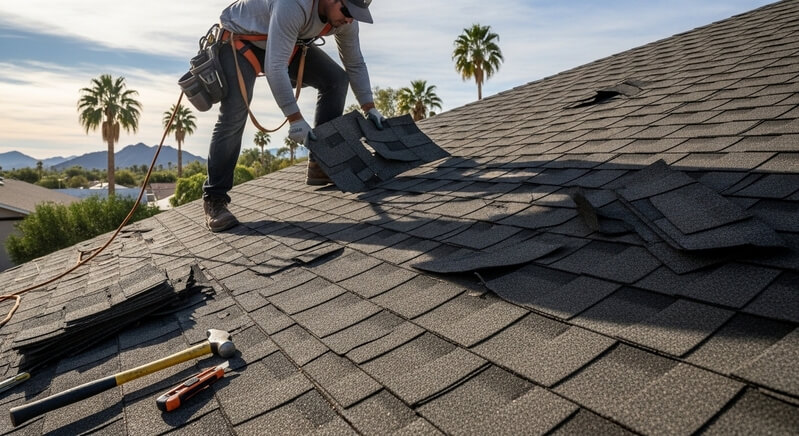
Cedar shake is a natural wood product, and wood moves with moisture. In a humid climate, shake roofs dry out slowly and evenly. In Tempe, Mesa, Chandler, and the rest of the East Valley, roof surface temperatures regularly pass 150°F on summer afternoons, and the shake dries out from the top down while the underside stays cooler. That mismatch is what causes splits, cupping, and curling edges well before a shake roof in a milder climate would show the same wear.
The practical result: a cedar shake roof that might last 30 to 50 years in the Pacific Northwest more commonly runs 20 to 30 years here, and it needs earlier, more frequent spot repair to get there. Repair itself is also more specialized than replacing an asphalt shingle — matching butt thickness, exposure, and weathered color on a wood shake roof takes an eye for detail most general shingle roof repair crews don’t practice regularly.
Warning signs your cedar shake roof needs repair
Most Tempe-area cedar shake problems show up as a handful of specific, visible symptoms rather than a sudden failure. Watch for:
- Splits running with the grain — thin cracks along the length of individual shakes, usually worst on south- and west-facing slopes that take the most sun.
- Cupping or curling — shake edges lifting away from the roof deck, which lets wind-driven rain get underneath during a monsoon storm.
- Silvery-gray, thin, brittle shakes — a sign the natural oils are gone and the wood has lost most of its water resistance.
- Moss or dark staining in shaded valleys — less common in our climate than in wet regions, but it does show up under trees or on north-facing sections that stay damp longer after storms.
- Exposed or rusted fasteners — nail heads that have worked loose as the wood shrinks and swells with the heat cycle.
- Soft spots or sagging at valleys and flashing lines — often the first visible sign of deck damage underneath, not just a shake problem.
A single split shake or two is a normal, cheap spot repair. Clusters of splits across a whole slope, or soft decking at a valley, usually mean it’s time for a broader conversation about scope — which is what the comparison below is for.
| What you’re seeing | Spot repair usually fits | Full re-roof usually needed |
|---|---|---|
| Number of damaged shakes | A few, scattered | Widespread across most slopes |
| Roof age | Under ~18 years | 20+ years, original install |
| Deck condition | Solid, no soft spots | Soft or spongy underlayment/decking |
| Leak history | First-time or isolated leak | Repeated leaks in different spots |
| Typical cost range | $350–$1,200 per repair visit | $18,000–$45,000+ for full replacement |
Not sure whether your shake roof needs a patch or a full plan for replacement?
What drives cedar shake roof repair costs in the Valley
Three things move the price of cedar shake roof repair more than anything else here. First is material sourcing — matching weathered shake color and exposure means a repair crew often can’t just grab shingles off a shelf; shakes may need to be ordered in the right grade and length. Second is steepness and access, since older shake homes in neighborhoods like Scottsdale and Chandler often have steeper pitches that need more careful footing and staging. Third is what’s underneath: if the felt underlayment or decking has already been compromised by a long-running leak, the “repair” scope grows to include deck replacement before a single new shake goes on.
Homeowners considering a full roof replacement instead of ongoing patchwork should also factor in that most Valley roofing crews doing wood shake work quote replacement in linear feet of ridge and ventilation detailing, not just square footage — those details matter more on wood roofs than on tile or asphalt.
HOA rules and Arizona fire-code requirements for wood shake
This is the part of cedar shake ownership that catches people off guard, and it’s worth covering before any repair decision. Several Valley municipalities and many HOAs restrict untreated wood shake roofing, particularly in areas bordering desert open space, because untreated cedar carries a poor fire rating. If your shake roof was installed decades ago, it may predate current code and be “grandfathered,” but a large repair or full tear-off can trigger a requirement to upgrade to a Class A fire-retardant-treated shake or shingle, or in some HOAs, a different material entirely.
Before you commit to a large repair, it’s worth a quick call to your HOA architectural committee or the city building department to confirm what’s allowed if the work goes beyond a minor patch. This step gets skipped more often than it should, and it’s the single biggest reason a repair project stalls partway through.
Maintenance that extends cedar shake life in desert heat
A handful of maintenance habits meaningfully slow the drying-and-splitting cycle that Arizona heat causes:
- Periodic oiling or preservative treatment — replaces natural oils the sun bakes out, typically every few years depending on exposure.
- Keeping debris off the roof — leaves and palm debris trap moisture against shake in shaded spots and accelerate rot in exactly the areas that otherwise dry fine.
- Good attic ventilation — reduces the temperature differential between the top and bottom of each shake, which is a major driver of splitting.
- Annual roof inspection — catches a handful of split or curled shakes while it’s still a small, inexpensive repair.
- Prompt attention after monsoon wind — a lifted or cracked shake left exposed for a full summer season degrades much faster than one that gets a quick fix.
A real Ahwatukee example: split shakes after a long summer
A homeowner in Ahwatukee called us in early fall after noticing a handful of curled, splitting shakes on the west-facing slope of a roof installed in the late 2000s — the side that takes the most direct afternoon sun. There was no active leak yet, but two of the shakes had already cracked enough to expose the underlayment beneath. Because the deck underneath tested solid and the damage was limited to about a dozen shakes concentrated on one slope, this was a straightforward spot repair: matching shakes were sourced, the damaged sections were replaced, and the homeowner scheduled an oil treatment for the rest of the roof to slow the same process on the remaining slopes. Total cost stayed well under what a full re-roof would have run, precisely because the problem was caught before it spread to the deck.
Why late September is a good time to check a shake roof
Arizona’s monsoon season officially runs through September 30, which means any wind-lifted or storm-cracked shake from a summer storm is still fresh and easy to spot right now, before a full year of additional sun exposure makes the damage harder to diagnose and more expensive to fix. If your shake roof took a wind event this summer and hasn’t been checked since, the next few weeks — after the last storms but before the shakes have had a full extra season to dry and curl further — are a good window for an inspection.
Frequently asked questions
How long does a cedar shake roof last in Arizona?
Most cedar shake roofs in the Tempe area last 20 to 30 years with regular maintenance, shorter than the 30-to-50-year range common in cooler, wetter climates, because intense sun and heat cycling dry out the wood faster.
Can you repair a few cedar shakes without replacing the whole roof?
Yes. Spot repair of a handful of split, cupped, or missing shakes is common and usually costs a few hundred to just over a thousand dollars, as long as the decking and underlayment beneath the damaged area are still sound.
Is cedar shake roofing still allowed in Tempe and the East Valley?
It depends on the city, the HOA, and whether the work is a minor repair or a larger project. Many jurisdictions and HOAs near desert open space require Class A fire-retardant-treated shake for new installations or major repairs, even if an older untreated roof is grandfathered in.
What does oiling a cedar shake roof actually do?
Preservative oil treatments replace natural oils that Arizona sun bakes out of the wood over time. This keeps shakes more flexible and water-resistant, which slows the splitting and cupping that lead to leaks.
How can I tell if a leak is coming from the shakes or the deck underneath?
A leak that shows up only during wind-driven rain and near a specific visible split or gap is usually the shake itself. A leak that persists or worsens after the storm has passed, or that shows up as soft, spongy spots when walked on, usually means the underlayment or decking has already been compromised.
Does homeowners insurance cover cedar shake roof repair in Arizona?
Coverage depends on the cause. Sudden storm or wind damage is often covered, while gradual wear from sun exposure typically is not. It’s worth documenting shake condition with photos each year so storm damage is easy to distinguish from ordinary aging if you ever file a claim.
What’s the first sign that a cedar shake roof needs professional attention?
Curled or cupped edges on more than a few shakes in one area, especially on a south- or west-facing slope, is usually the earliest visible sign worth calling a roofer about, well before any leak actually appears indoors.
Cedar shake roof repair in Arizona comes down to catching splits and curling early, understanding what your HOA or city will require if a repair grows into a larger project, and staying ahead of the desert sun with routine maintenance. If you’re weighing a repair against a bigger decision, our guide on roof replacement and our roof inspection and maintenance page cover the next steps, or you can contact us for a free look at your specific roof.