
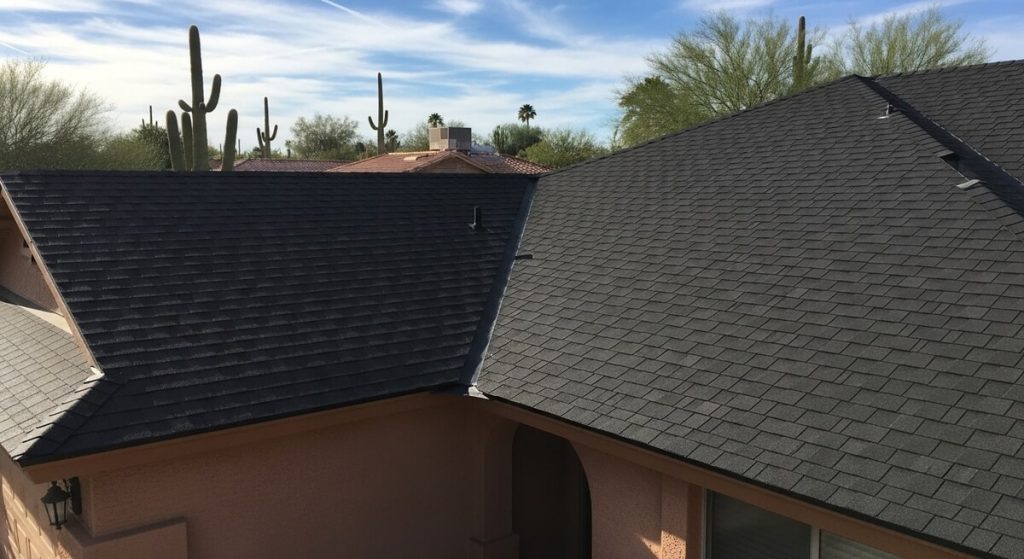
Roof repair costs in Mesa, AZ, can differ sharply block to block — not because of bad luck, but because the city is a mix of decades-old established neighborhoods and brand-new master-planned communities, each with a different roofing profile. This guide compares typical roof repair costs between older Mesa neighborhoods like Dobson Ranch and newer master-planned communities like Eastmark, and explains what actually drives the price gap so you can budget with real numbers instead of guessing.
How do repair costs compare between Dobson Ranch and Eastmark?
Dobson Ranch, built mostly in the 1970s and 1980s, carries roofs that are often on a second or third repair cycle, so a service call there is more likely to uncover underlayment wear, brittle tile clips, or aging flashing hiding behind a simple-looking leak. Eastmark, a newer master-planned community still filling in with new construction, has roofs that are mostly under 10 years old, so repairs there tend to be isolated — a single cracked tile, a loose vent boot, storm debris — without the layered wear of an older roof system. Mesa roof repair costs in general run from a few hundred dollars for a minor leak or patch up toward several thousand for a larger section replacement, and age is usually the bigger swing factor between those two numbers, more than square footage or even roof material.
| Factor | Dobson Ranch (established, 1970s–80s) | Eastmark (newer master-planned) |
|---|---|---|
| Typical roof age | 30–50+ years | Under 10 years |
| Minor repair (leak, small patch) | $350 – $1,100 | $250 – $750 |
| Moderate repair (section, flashing) | $1,500 – $5,000+ | $900 – $2,800 |
| Most common hidden cost driver | Worn underlayment, discontinued tile matches | Builder-grade flashing, HOA material review |
These are general planning ranges, not quotes — the only way to know your real number is a roof inspection and a written estimate.
Want a written repair estimate for your specific Mesa roof?
Why does roof age matter more than roof size?
A larger roof on a newer Eastmark home can still cost less to repair than a smaller roof in Dobson Ranch, because age changes what a crew finds once they’re actually on the roof, not just how much surface area they cover. Four factors explain most of the gap:
- Underlayment condition. Arizona’s heat breaks down roofing underlayment over decades; a 40-year-old Dobson Ranch roof is far more likely to need underlayment work hiding under what looked like a single leak, turning a quick patch into a partial roof leak repair.
- Material availability. Older tile and shingle profiles sometimes aren’t made anymore, so matching a handful of cracked tiles on a 1980s Dobson Ranch roof can take longer and cost more than a straightforward swap on a newer tile roof repair in Eastmark.
- Builder-grade components. New-construction roofs sometimes use minimum-spec flashing or vent boots that fail earlier than expected, so an Eastmark roof under warranty age can still need an unplanned repair even though the roof itself is young.
- HOA and design-review rules. Eastmark’s HOA guidelines can require specific tile colors or materials on visible repairs, adding a documentation step that an older, less restrictive Dobson Ranch property typically doesn’t have.
What typically goes wrong on an older Dobson Ranch roof?
In established Mesa neighborhoods like Dobson Ranch, the most common service calls involve cracked or slipped tiles from decades of thermal cycling, deteriorated flashing around chimneys and skylights, and underlayment that has simply outlived its expected lifespan under Arizona sun. A roof inspection on a home this age often turns up more than the single visible problem that prompted the call, which is why repair estimates for older homes tend to widen once a crew is actually up on the roof. None of this means an older roof needs full roof replacement right away — many Dobson Ranch roofs are repaired successfully for years past the 30-year mark — but it does mean repair costs there carry more built-in uncertainty than a newer roof.
What typically goes wrong on a newer Eastmark roof?
Newer Eastmark homes mostly need repairs from storm impact, installation shortcuts, or isolated component failure rather than general wear. A loose vent boot, a few tiles cracked by monsoon hail or debris (see storm and monsoon damage repair), or flashing that wasn’t sealed quite right during original construction are the typical culprits. Because the roofing materials are current and usually still in production, matching replacement tile or shingle is faster and cheaper than on an older roof. If a newer roof is leaking in multiple spots within its first few years, that’s worth a closer inspection — it can point to an installation issue rather than normal wear, and may be a warranty conversation with the builder as much as a repair job.
Does Eastmark’s HOA add cost or delay to a repair?
It can add time more than raw material cost, similar to HOA review in other East Valley master-planned communities. Eastmark’s design guidelines can require pre-approval of tile or shingle color and style for any visible repair, which means a short review step before a crew can start work on a street-facing section. That review rarely changes the labor itself, but it can push out the timeline by a few days, so it’s worth building into your schedule if the leak isn’t an emergency. Dobson Ranch, as an older and less architecturally restricted neighborhood, typically doesn’t carry this extra step, which is part of why two otherwise identical repairs across the two neighborhoods can land on different timelines even when the cost is similar.
A real-world example: two Mesa homeowners, two different roof bills
Picture two homeowners who each notice a ceiling stain after the same late-summer storm. One owns a single-story ranch home in Dobson Ranch, built in the late 1970s; the other owns a two-year-old home in Eastmark. Both leaks trace back to a cracked vent boot. The Eastmark repair is quick — the crew replaces the boot and one cracked tile, finished within a couple of hours once the HOA’s color match is confirmed, landing near the low end of the minor-repair range. The Dobson Ranch repair starts the same way, but once the crew pulls back the surrounding tile they find underlayment that’s dried out and cracking nearby, so the job expands into a small section repair rather than a single-point patch, pushing the bill into the moderate range. Same trigger, same storm — different roofs, different outcomes.
How can Mesa homeowners of either roof age control costs?
Three habits help regardless of neighborhood or roof age: get a roof inspection before monsoon season so small issues are caught while they’re still small, call for repairs as soon as a leak appears rather than waiting to see if it gets worse, and ask for a written, itemized estimate so any HOA review time, material matching, or underlayment work is broken out separately from base labor. Homeowners across Mesa and the rest of the East Valley save money the same way — by treating small roof problems as small problems instead of letting Arizona heat and monsoon storms turn them into bigger ones.
Frequently asked questions
Why do older Mesa neighborhoods like Dobson Ranch cost more to repair than newer ones?
It’s mostly underlayment age and material matching, not labor rates. Decades of Arizona heat wear down roofing underlayment, and older tile or shingle profiles can be harder to match, both of which add cost once a crew is actually on the roof.
Is a newer roof in Eastmark ever more expensive to repair than an older one?
It can be, if the issue points to an installation shortcut rather than normal wear — for example, multiple leaks appearing in the first few years. In that case, it’s worth a closer inspection and possibly a warranty conversation with the builder.
Does Eastmark’s HOA require approval before a roof repair?
Many Eastmark guidelines call for color or material pre-approval on visible repairs. This typically adds a short review step rather than extra labor cost, but it’s worth confirming with your HOA before scheduling.
How much does a small roof leak repair cost in Mesa, AZ?
Minor leak repairs, like resealing a vent boot or replacing a few tiles, generally run in the low hundreds on a newer roof and can run higher on an older roof once hidden wear is factored in. A written estimate after inspection is the only way to get an exact number.
Should I repair or replace an older roof in Dobson Ranch?
Repair is almost always the cheaper first step. Replacement becomes the better value when a roof has multiple failure points at once, is well past its expected lifespan, or keeps needing repairs in the same area.
Does homeowners insurance cover storm damage repairs in Mesa?
Often, if the damage is sudden and storm-related rather than gradual wear. Coverage details vary by policy, so confirm with your insurer before assuming a repair is or isn’t covered.
Do I need a permit to repair my roof in Mesa?
Small patch repairs typically don’t require a permit, but full tear-offs or structural repairs usually do. Requirements can vary, so confirm with your contractor or the City of Mesa building department before work starts.
How often should Mesa homeowners schedule a roof inspection?
Once a year is a reasonable baseline for most roofs, with an additional check after any significant monsoon storm, regardless of whether the home is in an older or newer neighborhood.
Whether your roof is a 1970s original in Dobson Ranch or a two-year-old build in Eastmark, the fastest way to a real number is an on-site look rather than a guess. Schedule a roof inspection or get free quotes from local roofers for a written Mesa roof repair estimate.
Related reading: Roof Repair Costs: Tempe vs. Scottsdale vs. Chandler, Scottsdale HOA Tile Roof Approval, and New Tile Roof in Gilbert: Repair or Full Replacement?
Related reading: If you’re in the Alta Mesa area specifically, see our guide to common Alta Mesa roof repair issues for the tile and underlayment problems typical of that neighborhood’s older homes.