
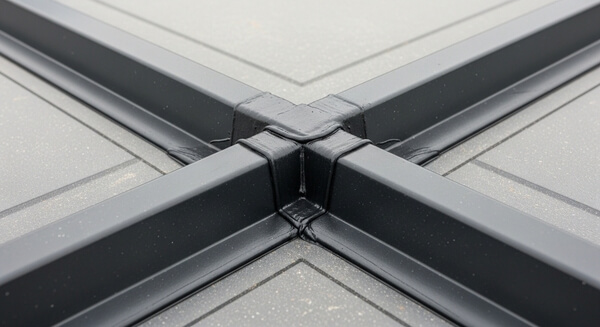
Standing seam metal roof repair in Tempe, AZ usually comes down to one of four failure points: a lifted or separated seam, a failed panel clip, a backed-out fastener, or a dented or punctured panel. Most of these can be repaired in place by a roofer experienced with standing seam systems, without replacing the whole roof.
What does standing seam metal roof repair actually involve?
Standing seam metal roof repair means fixing the specific part of the system that failed, rather than replacing the whole panel run. A standing seam roof is built from long interlocking metal panels joined at raised vertical seams, held down by hidden clips fastened to the deck. Because the panels expand and contract as a single sheet, a problem at one seam, clip, or fastener can show up as a leak many feet away from where the water actually gets in.
That’s the biggest difference from shingle or tile repair: tracing the real entry point matters more than patching the spot where a stain appears on the ceiling. A roof inspection that follows the seam and clip layout, not just the visible damage, is what separates a lasting fix from a repeat callback. Compare that targeted approach with general metal roof repair options if you’re not yet sure what type of panel system you have.
Seams, clips, fasteners and panels: what’s actually failing?
Four failure types account for almost every standing seam repair call in the Valley. The table below breaks down what each looks like and the fix a roofer would typically recommend.
| What you’re seeing | Recommended fix | |
|---|---|---|
| Seam lifting or separating | Not cosmetic — the interlock has opened at that point | Reseal and re-crimp the seam with a manufacturer-matched tool; don’t just caulk over it |
| Loose or broken panel clips | Panel rattles in wind or has visible movement at the seam | Replace the failed clips in that run; over-tightening can crack the panel |
| Backed-out or enlarged fastener holes | Exposed screw heads, rust trails below fasteners | Remove and replace with oversized gasketed fasteners driven into sound decking |
| Minor surface dents | Hail or debris marks with no visible gap at a seam | Usually cosmetic; monitor rather than repair unless a seam nearby is also compromised |
| Panel puncture or tear | A visible hole or split, often from a falling branch | Patch with matching metal flashing and seam sealant, or swap the single panel |
| Corrosion across multiple seams | Widespread rust, repeated leaks after past repairs | Compare repeat-repair cost against full replacement before committing further |
Not sure which failure type you’re dealing with?
Why Arizona heat and monsoon wind stress these panels
Standing seam metal is designed to expand and contract with temperature, but Tempe’s swing from summer roof-surface temperatures well above 150°F down to cool winter mornings is more extreme than most of the country sees. That repeated thermal cycling is what works fasteners loose over time and can gradually open a seam that was crimped correctly when it was installed. It’s a slow process, which is why fastener backout often shows up as a years-later problem rather than something tied to one storm.
Monsoon season adds a second stress: wind-driven rain can push water sideways into a seam that’s already loosened, and wind gusts can flex a panel enough to stress a weak clip run further. Arizona’s monsoon season officially runs through the end of September, so early October is a reasonable window to have seams and clips checked before the drier, windier fall and winter months, and again before next summer’s heat cycle begins. A seasonal check is also a good time to confirm nothing from this year’s storm or monsoon damage is still unresolved.
DIY fixes vs. calling a local roofer
A homeowner can usually spot the warning signs from the ground or from gutter-line photos: rust streaks below a fastener line, a seam that looks slightly open compared to the runs around it, or a panel edge that looks like it’s lifted. What’s harder to do safely without the right harness and walk boards is the actual repair. Standing seam panels are slippery, the seams are not meant to be walked on directly, and a wrong-tool seam repair can crack the crimp and make the leak worse.
Reasonable DIY steps: clear debris and leaf buildup near valleys and seams, take dated photos of anything that looks different after a storm, and avoid driving any new fasteners into the panels yourself. Everything past that — re-crimping a seam, replacing clips, or swapping a punctured panel — is worth having a contractor from our network look at, since the repair method has to match the specific panel profile installed.
What standing seam metal roof repair typically costs in Tempe
Repair costs for standing seam systems vary with how many seams or clips are affected and how accessible the roof is, and a local roofer’s quote after an in-person look will be more accurate than any online estimate. In general, a single seam reseal or clip replacement in one run costs far less than a full panel swap, and a full panel swap costs far less than re-roofing. That’s why catching a loose clip or a slightly lifted seam early, before it spreads to neighboring panels or lets water reach the decking, keeps the job in the cheaper end of that range.
Ask any contractor for a breakdown of what’s being repaired (seam, clip, fastener, or panel) rather than a single lump-sum number — it makes it easier to compare quotes and to verify your Arizona ROC license and insurance certificate before work starts.
A real-world example: tracing a seam leak
For example, a homeowner near Baseline and Rural Road in Tempe notices a water stain on the garage ceiling after a wind-heavy evening, several feet from where the standing seam panels meet the ridge. On inspection, a roofer traces the path up the seam and finds the actual opening is a lifted seam near the ridge cap, not a hole directly above the stain — water had traveled down the underside of the panel before dripping through a fastener penetration. The fix is a seam re-crimp and two replaced clips in that run, not a patch at the stain location. That kind of tracing is exactly why DIY caulking over the visible stain rarely solves a standing seam leak for good.
Frequently asked questions
What are the most common standing seam metal roof repair issues in Tempe, AZ?
Lifted or separated seams, loose or broken panel clips, backed-out fasteners, and occasional panel punctures from storm debris are the most common issues a roofer sees locally.
How do I know if I need a repair instead of a full panel replacement?
If the issue is limited to one or two seams, a handful of clips, or a few fasteners, a targeted repair usually makes sense. Widespread corrosion or repeated leaks across multiple seams after past repairs is a sign to compare repair cost against replacement.
Can a loose panel clip fix itself, or does it need attention?
It won’t fix itself. A loose clip lets the panel move more with wind and thermal cycling, which puts additional stress on the seam and nearby clips over time.
Why do fasteners back out of metal roof panels in Arizona?
Repeated expansion and contraction from Arizona’s wide temperature swings gradually works fasteners loose, especially on panels that have been in place for many years.
Is it safe to walk on a standing seam metal roof to inspect it?
Standing seam panels can be slippery and are easy to dent or scratch without the right footwear and walk boards, so a ground-level or gutter-line visual check is safer for a homeowner; a roofer can walk the roof safely to confirm what’s happening at the seams.
How much does standing seam metal roof repair typically cost?
Cost depends on how many seams, clips, or fasteners are affected and how accessible the roof area is. A single-seam or single-clip repair costs far less than a full panel replacement, which is why an in-person quote from a local roofer is the only reliable estimate.
How often should a standing seam metal roof be inspected in the Valley?
Once a year is a reasonable baseline, with an additional check after any notably windy monsoon storm, since wind stress on a weak seam or clip run is cumulative.
Can monsoon winds cause damage that isn’t visible from the ground?
Yes. Wind can flex panels enough to stress a clip run or push water into an already-loosened seam without leaving any obvious sign at ground level, which is part of why a post-monsoon inspection matters even if nothing looks wrong from the yard.
If your standing seam roof has a stain, a rattling panel, or visible rust at a fastener line, don’t wait for it to spread. Call (877) 689-3492 to be connected with a local roofer, or compare your situation against our guide to metal roof repair vs. replacement before deciding how far to take the fix.
Related reading: if you’re still deciding between panel types, see our metal roof cost breakdown for Tempe, AZ comparing exposed-fastener, metal shingle, and standing seam pricing.