
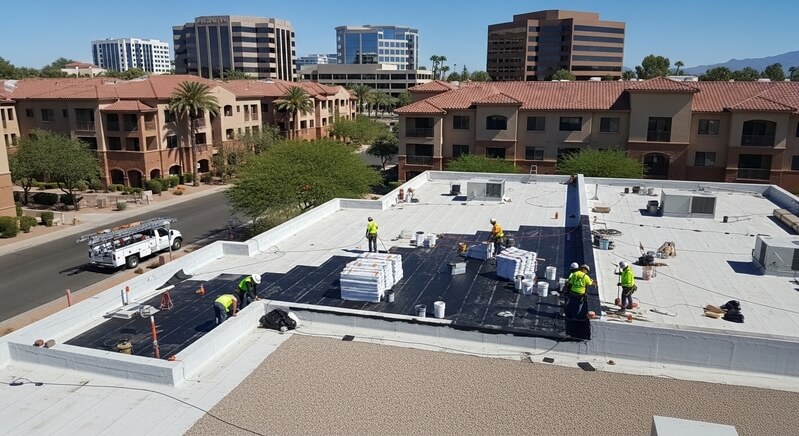
Built-Up Roof Repair in Tempe & the Phoenix Area
Blisters, cracking, gravel loss and flashing failures on built-up (BUR) roofs, repaired before they turn into leaks.
How a built-up roof works, and where it fails
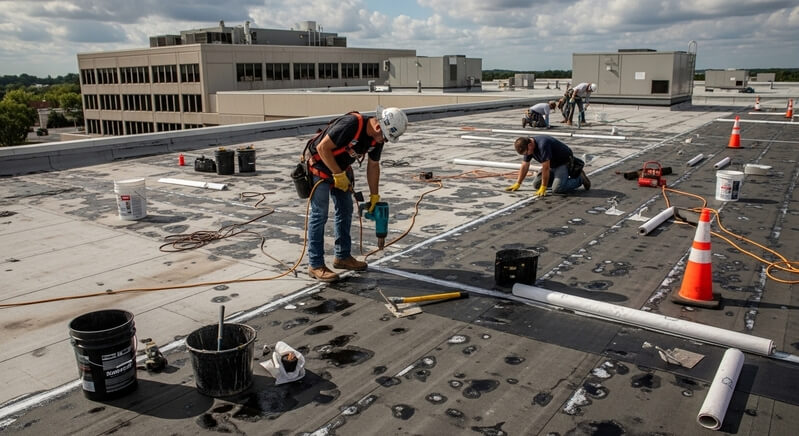
A built-up roof is made of several layers of asphalt and reinforcing fabric laid over the roof deck, then finished with gravel, a mineral cap sheet or a reflective coating. Those layers form a continuous waterproof membrane, which is why built-up roofs have been common on flat commercial and multi-unit buildings for decades.
In Arizona the weak points are predictable. Intense UV dries out the asphalt surface and causes cracking, heat makes trapped moisture expand into blisters, and gravel loss leaves the felt exposed. Flashing at parapet walls, drains and rooftop equipment is where water usually gets in first. If your building has a flat roof, our flat roof repair and commercial roof repair pages cover related work.
Get a built-up roof quoteWhat to watch for on a built-up roof
Small defects on a BUR are cheap to fix and expensive to ignore.
Blisters or raised bubbles
Trapped moisture or air between layers expands in the heat and lifts the surface.
Alligatoring (cracked, scaly surface)
UV exposure dries the asphalt and cracks it into a pattern that lets water reach the felt.
Bare felt where gravel has washed away
Exposed felt ages quickly and can no longer protect the layers beneath it.
Leaks near parapets, drains or equipment
Failed flashing at edges and penetrations is the most common way water enters a BUR.
From first call to a sealed roof
Four steps, no surprises along the way.
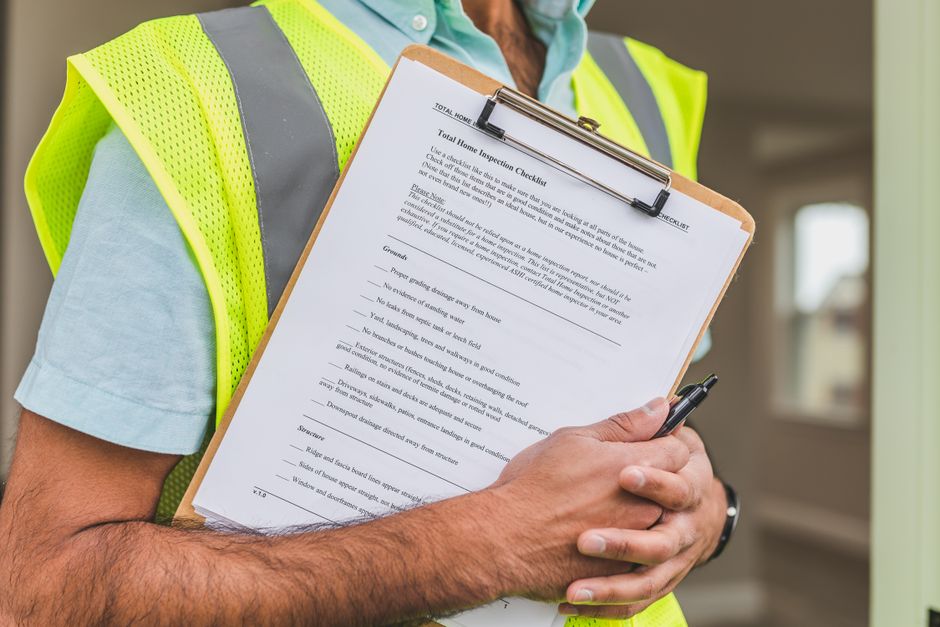
Free Inspection
The roofer walks the roof, photographs blisters, splits and flashing problems, and checks drainage.
Written Estimate
An itemized scope: which repairs, where, and whether a coating or moisture check makes sense.
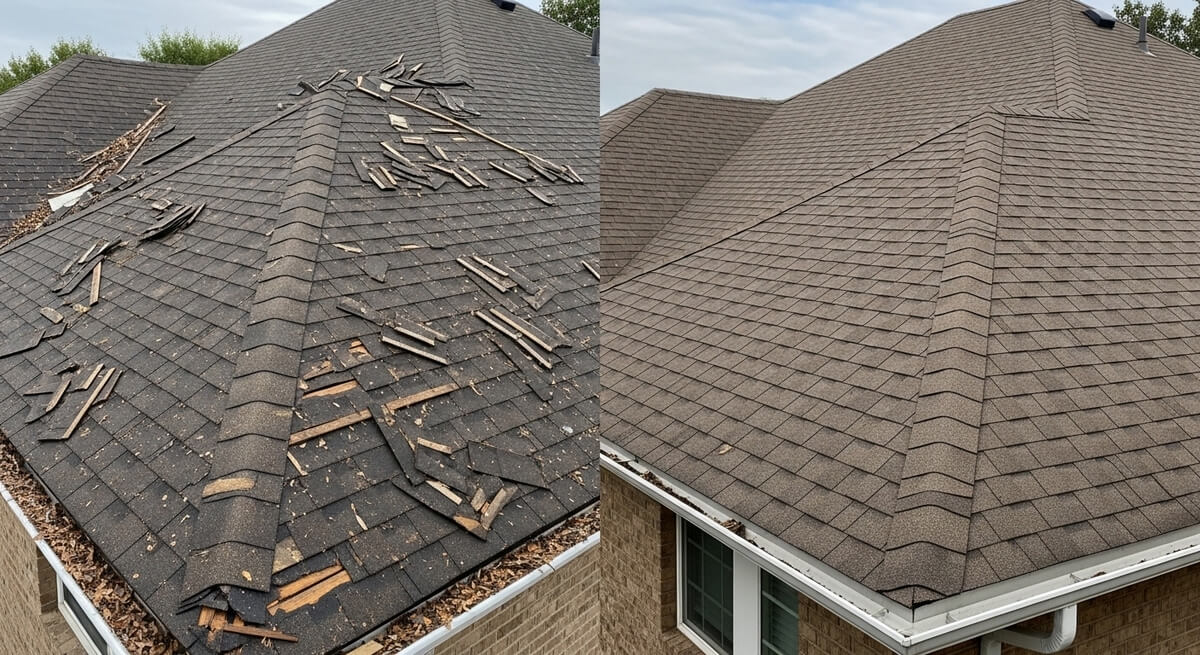
Repair
Blisters cut out and patched with new plies, flashing re-sealed, missing gravel replaced.
Final Walkthrough
Ask the roofer to walk the finished roof with you and note what to watch over the next monsoon season.

Other ways we can help
Built-up roof repair cost in Tempe, AZ
These are typical ranges for planning. The biggest unknown on a built-up roof is moisture inside the layers, so you get a written price after the inspection, before any work starts.
| Repair | What it involves | Typical range |
|---|---|---|
| Blister repair | Cut out the blister, dry the area, patch with new plies | $300 to $900 per area |
| Flashing at parapets, curbs or drains | Remove failed flashing and install new base and counter flashing | $500 to $2,000 |
| Gravel and flood coat restoration | Re-embed loose gravel or add new gravel over a fresh asphalt coat | Priced per area at inspection |
| Reflective coating over a sound BUR | Repair defects, prime and coat the whole roof | About $2 to $5 per sq ft |
Repair, coat or replace a built-up roof?
| Roof condition | Usual answer | Why |
|---|---|---|
| A few blisters or splits, dry insulation | Spot repair | The membrane is still doing its job between the defects |
| Alligatoring and bare felt, but dry | Repair and coat | A coating restores UV protection before the felt fails |
| Wet insulation in some areas | Remove wet areas, repair, then coat | Coating over wet insulation traps the moisture |
| Wet insulation over much of the roof | Replacement | Repairs would not last. See flat roof replacement |
Why built-up roofs wear faster in Arizona
- UV dries the asphalt. Once the top layer dries out, it cracks into the scaly pattern called alligatoring.
- Heat expands trapped moisture. Any air or water between the plies swells in summer heat and lifts the surface into blisters.
- Gravel loss. Monsoon wind and runoff move gravel off high spots, leaving felt exposed to sun.
- Ponding. Low spots that hold water after storms age much faster. See ponding water on flat roofs.
- Flashing. Parapet walls, drains and HVAC curbs move differently from the roof field, and that is where most BUR leaks start.
Built-up roof maintenance in Tempe
A built-up roof lasts longest when it is checked twice a year and after major storms. Keep drains and scuppers clear of dust and debris, look for blisters and bare spots, and check flashing at walls and equipment.
Our BUR maintenance schedule lays out what to check each season, and the guide to silicone, acrylic and elastomeric coatings compares the coating options. A reflective coating may also qualify for a cool roof rebate.
We connect you with roofers who repair built-up roofs on homes, multi-unit buildings and commercial properties in Tempe, Mesa, Chandler and Phoenix.
Built-up and flat roof guides
Built-up roof repair questions
What is a built-up roof (BUR)?
A built-up roof is a flat or low-slope roof made of several alternating layers of asphalt (bitumen) and reinforcing fabric, finished with gravel, a mineral cap sheet or a reflective coating. It has been used on commercial buildings for decades.
How long does a built-up roof last in Arizona?
A well-maintained built-up roof commonly lasts about 20 to 30 years, but Arizona's UV and heat wear down the surface faster, so coatings, drainage and regular inspections matter more here.
Can a built-up roof be repaired, or does it need to be replaced?
Blisters, cracked flashing, exposed felt and small splits can be repaired. Replacement becomes the better option when the layers are widely cracked or moisture has soaked into the insulation beneath.
Why does my built-up roof have blisters or a cracked, scaly surface?
Blisters form when moisture or air is trapped between the layers and expands in the heat. A cracked, scaly look, called alligatoring, comes from long UV exposure drying out the asphalt surface.
Is a reflective coating worth it on a built-up roof?
Often, when the layers underneath are still sound. A coating slows UV damage and lowers roof surface temperature, which can extend the life of the roof, but it cannot fix a roof that is already saturated.
How much does built-up roof repair cost in Tempe?
A single blister repair often runs $300 to $900, and flashing repairs at parapets or drains $500 to $2,000. A coating over a sound built-up roof is priced by the square foot after an inspection.
Can you coat over a gravel built-up roof?
Usually the loose gravel has to be removed or the surface prepared first, so the coating can bond to the membrane. The roof also has to be dry underneath, which is checked during the inspection.
Is a built-up roof the same as a tar and gravel roof?
Yes. Tar and gravel is the common name for a built-up roof finished with a gravel surface. Some built-up roofs use a mineral cap sheet or a coating instead of gravel.
Flat roof showing its age?
Call now or request a free inspection online.