

Flat Roof Replacement in Tempe, AZ
When recurring leaks and a failed coating mean it's past the point of another patch — full replacement that restores real protection.
4.9★
Google Rating, 187+ reviews
14 yrs
Serving the Tempe area
2,400+
Projects completed
2-4 days
Typical install time
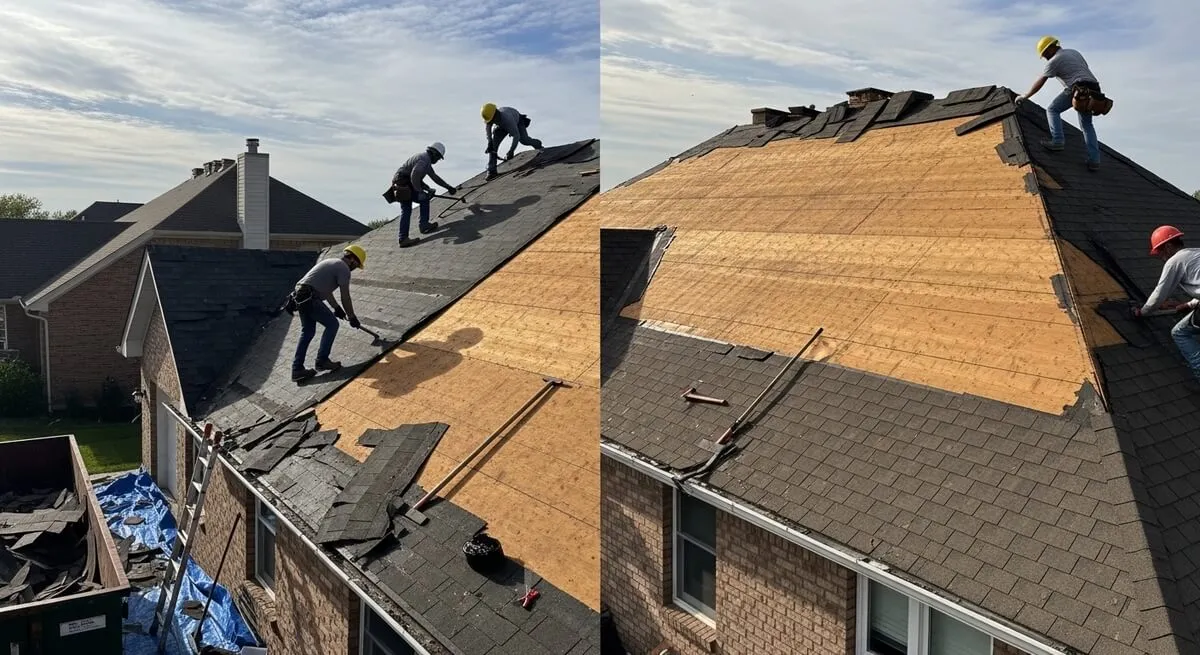
Flat roof problems stay hidden until a leak or membrane failure forces the issue
Unlike a pitched roof where wear is often visible from the ground, flat roof deterioration — thinning membrane, failing seams, insulation soaking up moisture underneath — usually stays invisible until water actually gets through. By then, a single patch is treating a symptom, not the underlying system.
Replacement makes sense once you're past isolated damage: recurring leaks in different spots, a coating that was supposed to buy a few more years failing early, or a membrane showing widespread cracking or blistering rather than one bad section.
Get a free flat roof assessmentWhen a flat roof needs replacement, not another patch
Frequent leaks
Multiple repair calls in the past year, especially at different points each time.
Recurring ponding water
Water sitting more than 48 hours after rain, especially in the same low spot every time.
Cracks or blisters
Widespread membrane cracking or blistering, not one isolated repair-sized area.
A coating that failed early
If a recoat was supposed to buy several more years and didn't, the membrane underneath is likely past saving.
What we replace a flat roof with
The right system depends on your roof's use, budget, and current setup.
| System | What it is | Best fit |
|---|---|---|
| TPO | Single-ply reflective membrane, heat-welded seams | Commercial and residential flat sections wanting seam durability and reflectivity |
| Modified bitumen | Asphalt-based sheet system, torch or cold-applied | Roofs already using this system, straightforward replacement in kind |
| Built-up roofing (BUR) | Layered bitumen and reinforcing fabric, gravel or cap sheet finish | Older commercial roofs where a traditional layered system fits the structure |
| Spray foam | Sprayed polyurethane foam with a protective coating | Roofs wanting a seamless, insulating system on a recoat schedule |
Already have foam and just need it recoated or patched? See foam roof repair instead.
How we make the call on a flat roof
| What we look at | Repair usually fits | Replacement usually fits |
|---|---|---|
| Leak history | First or isolated leak point | Recurring leaks in different spots |
| Membrane condition | Localized damage | Widespread cracking or blistering |
| Ponding water | Minor, addressed with drainage fix | Recurring in the same low spot despite fixes |
| Coating history | Recoat holding as expected | Recent recoat already failing |
Our flat roof replacement process
Inspection
We check the membrane, insulation, and drainage, and document what we find.

Removal & Preparation
Old membrane and, where needed, insulation removed down to a clean, dry surface.
Deck Inspection
The deck underneath is checked and repaired if moisture has caused damage over time.
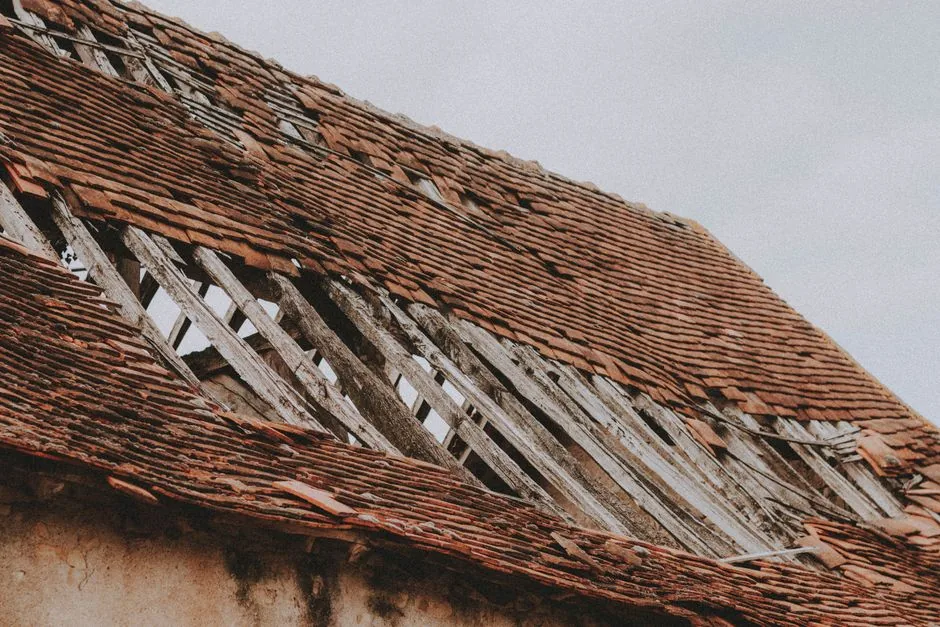
New Membrane Installation
The chosen system installed to spec, with insulation and drainage improvements where needed.
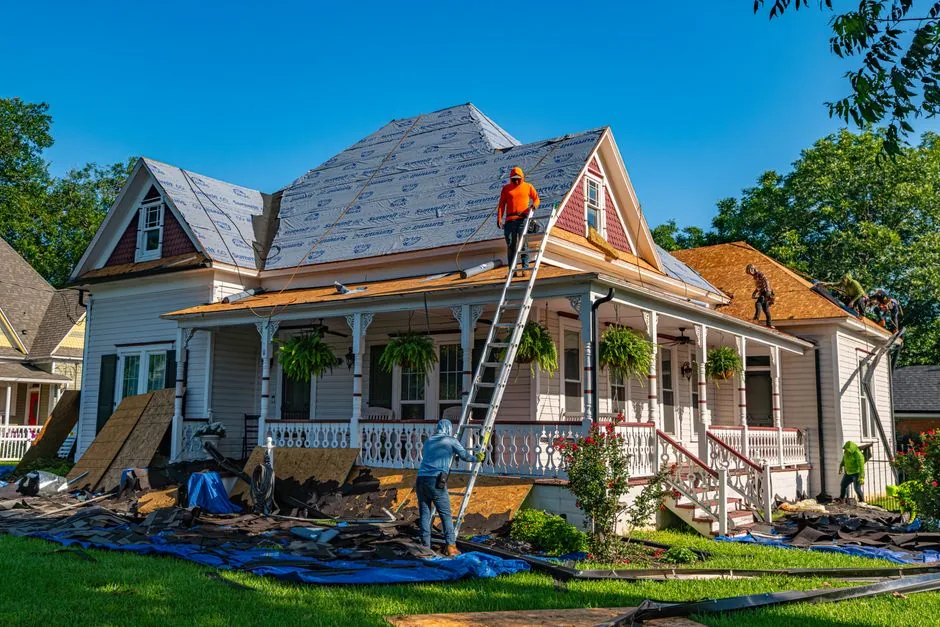
Flashing & Drain Checks
Every penetration, edge, and drain sealed and tested before we call the install complete.
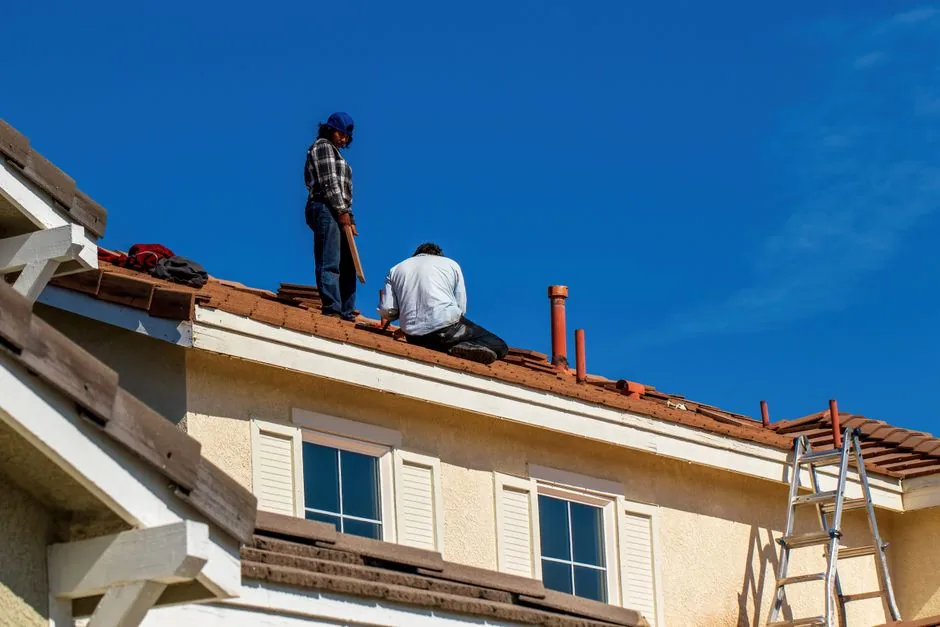
Final Inspection
We walk the finished roof with you and confirm drainage and seams before we call it done.
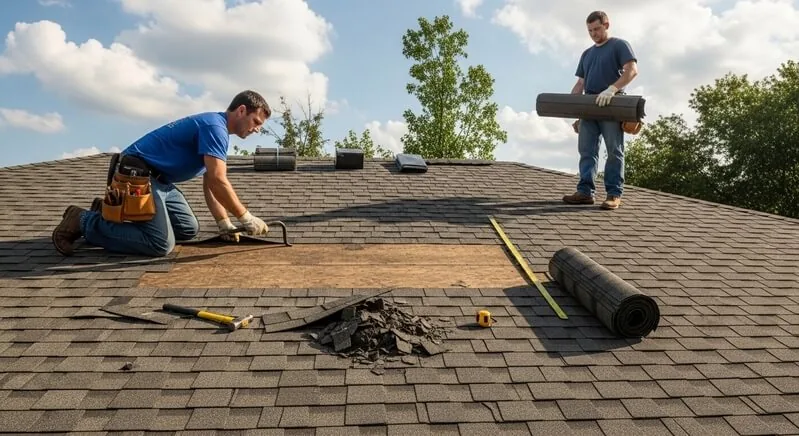
What actually wears out a flat roof here
Extreme heat
Sustained summer temperatures accelerate membrane aging faster than in milder climates.
UV exposure
Some of the most consistent, intense sun exposure in the country breaks down membrane and coatings over time.
Monsoon rain
Sudden, heavy rain tests drainage and seams that were fine under normal conditions all year.
Thermal expansion
Wide swings between a 115°F afternoon and a cool night stress seams and fasteners over repeated cycles.
Flat roof replacement cost factors
Spray foam systems typically run $5-$9 per square foot installed; TPO, modified bitumen, and BUR vary by roof condition and access. What moves your specific number:
- Roof size — larger roofs mean more material and labor, though cost per square foot often improves at scale.
- Existing material removal — tearing off multiple old layers costs more than a single-layer removal.
- Membrane type — TPO, modified bitumen, BUR, and foam all carry different material and labor costs.
- Insulation — adding or upgrading insulation during replacement affects both cost and long-term energy performance.
- Drainage improvements — correcting a ponding problem with tapered insulation or added drains is a worthwhile add where needed.
See our full roof replacement cost guide for pricing across every material we install.
What a full replacement actually buys you
- Real waterproofing — a new system starts from zero, not from wherever the old one left off.
- Better energy efficiency — a reflective membrane or fresh coating paired with good insulation reduces heat gain.
- Lower ongoing maintenance — fewer emergency repair calls once the underlying system, not just the surface, is sound.
- A longer runway — resets the clock instead of stacking patches on an aging system.
Other ways we can help
Flat roof replacement questions
How do I know my flat roof needs replacement instead of another repair?
If you've had two or more repair calls in the past year, the membrane shows widespread cracking or blistering rather than one isolated spot, or a coating that was supposed to buy a few more years failed early, replacement is usually the better value than another patch.
What flat roofing system should I switch to?
It depends on your roof's use, budget, and current system. TPO is a common upgrade from older BUR systems for its seam durability and reflectivity, while foam remains a strong option where recoating on a schedule is acceptable. We'll walk through the tradeoffs for your specific roof during the inspection.
Does ponding water always mean I need a full replacement?
Not always — sometimes ponding is fixed with tapered insulation or improved drainage during a recoat. But recurring ponding on an aging membrane is often a sign the whole system is past the point where a localized fix holds up.
How long does flat roof replacement take?
Most residential and small commercial flat roof replacements take two to four days, depending on roof size, the system chosen, and how much of the existing material needs to come off first.
Can you replace a flat roof without disrupting my business?
For commercial properties, we schedule work to minimize disruption and can phase larger roofs in sections — ask about this specifically during your estimate if continued operation during the work matters.
Does a new flat roof improve energy efficiency?
Often yes, especially when paired with a reflective membrane or coating and improved insulation, since an aging flat roof and worn insulation both let more heat into the building during Arizona's long cooling season.
Tired of patching the same flat roof?
Get a free inspection and an honest answer — recoat, repair, or full replacement.