
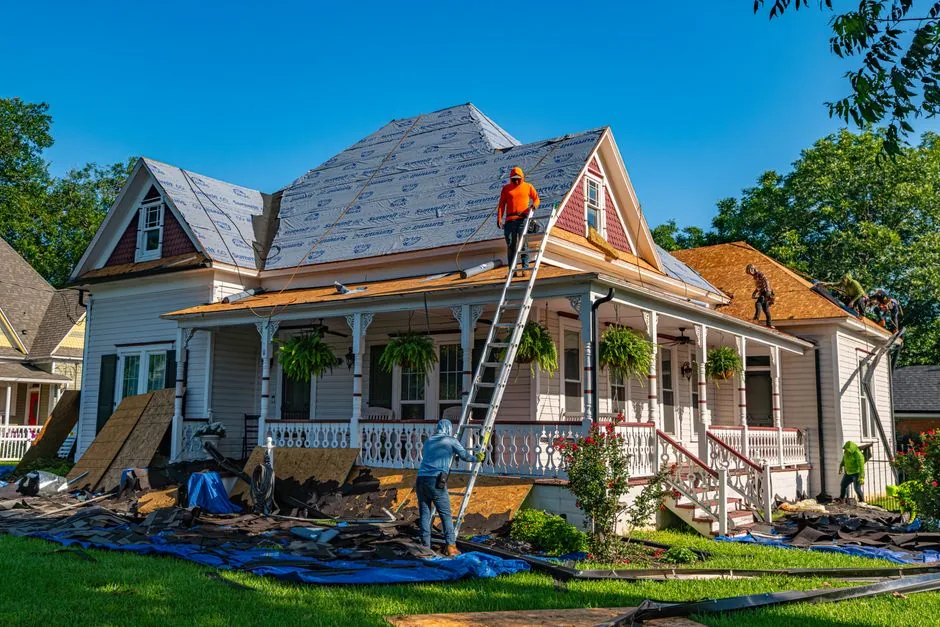
Every homeowner asking about roof replacement in Tempe wants the same thing first: a real number, not a "call for pricing" wall. Here's what full roof replacement actually costs across the East Valley in 2026, broken down by material, plus the specific factors that push a quote toward the low or high end of the range, how financing and insurance fit in, and what to check before signing with any contractor.
Roof replacement cost by material
- Asphalt shingle: roughly $4–$6 per square foot installed. A typical 1,500–2,000 sq ft roof runs about $6,000–$12,000 total.
- Concrete or clay tile: roughly $8–$14+ per square foot installed, reflecting both material and the labor to handle its weight. Full tile replacement commonly runs $15,000–$30,000+ depending on tile profile and roof complexity.
- Flat / foam roofing: typically $5–$9 per square foot for spray polyurethane foam with a protective coating, common on additions and commercial buildings.
- Metal (standing seam): typically $9–$14 per square foot, positioned between shingle and tile on both cost and lifespan.
Across all materials, a full replacement on an average Tempe single-family home lands somewhere between $8,000 and $25,000, with larger or steeper roofs, multiple stories, or extensive tear-off pushing toward the higher end. Material brand and grade matter within each category too — products from manufacturers like GAF and CertainTeed span economy to premium lines with different warranty terms attached.
What actually moves your number
- Roof size and pitch. Square footage is the baseline, but a steep pitch adds labor time and safety equipment cost that a low-slope roof doesn't need.
- Number of layers being torn off. Removing one existing layer of roofing costs less than stripping two or three layers accumulated over past "roof over" repairs.
- Decking condition. If the plywood or OSB deck underneath has rot or water damage once the old roofing comes off, replacing it adds cost that can't be estimated with full accuracy until the tear-off is underway.
- Access and complexity. Multiple roof planes, dormers, chimneys, and skylights all add flashing work and labor time beyond a simple rectangular roof.
- Material grade. Within each material category, architectural shingle costs more than 3-tab, and premium tile profiles cost more than standard concrete tile.
The inspection is always free, and you'll have an exact, itemized price before any work starts — a range like this is a starting point for budgeting, not a quote for your specific roof.
Want the real number for your roof, not a national average?
Get a Free Itemized EstimateRepair vs. full replacement — which actually costs less?
Emergency and isolated repair typically runs $200–$2,500 depending on scope — a handful of shingles, a section of cracked tile, a resealed flashing point. That's the right call while a roof is otherwise sound. But once a roof crosses 15-20 years (shingle) or shows widespread underlayment failure (tile), the math flips: two or three repair calls a year can add up to more over a few years than one properly financed full replacement. A free inspection is the only reliable way to know which side of that line your specific roof is on.
Project timeline and permits
Most single-family shingle replacements take one to two days on site. Tile replacement typically takes three to five days given the labor involved in removing, resetting, or replacing tile plus underlayment work underneath it. Larger, steeper, or more complex roofs extend either timeline. Most jurisdictions in the Valley require a permit for a full roof replacement — a licensed contractor typically pulls this as part of the project rather than leaving it to the homeowner to navigate separately.
Financing and insurance
Financing options can spread a full replacement's cost over monthly payments rather than one lump sum — comparing total cost including any interest against paying upfront helps determine which makes more sense for a given budget. Separately, if the reason for replacement is storm-related — wind, hail, or a specific covered event rather than routine age — insurance may cover some or all of it, which is worth ruling out with a documented inspection before assuming the full cost is out of pocket. Confirm specific deductible and coverage details directly with your insurer, since policies vary.
Choosing a licensed contractor
The material and the installer matter about equally to how a roof actually performs over its expected lifespan. Before signing anything, verify the contractor's Arizona ROC license is active, ask for an itemized written estimate rather than a verbal number, and confirm what warranty terms — both material and workmanship — apply to the specific job. The National Roofing Contractors Association recommends the same basic diligence nationally: license verification, written scope, and clear warranty terms before any contract is signed.
Is roof replacement worth the investment?
Beyond stopping active leaks and repair calls, a full replacement typically brings a meaningful reduction in cooling costs when paired with a reflective coating or upgraded insulation, since an aging roof and worn attic ventilation both let more heat into the home during Arizona's long cooling season. It also resets the maintenance clock — a new shingle roof buys 15-20 years before the next full replacement decision, and a new tile roof's underlayment buys 20-25 years before that specific work is needed again, even though the tile itself may already be original to the home.
Getting an accurate quote
Any number in this guide is a planning range, not your price. An accurate quote requires walking the actual roof, measuring square footage and pitch, checking decking condition, and confirming material choice — all part of a standard free inspection. That's the only way to turn "roof replacement costs $8,000 to $25,000" into the one number that applies to your house. A proper quote should also specify tear-off scope, disposal, and what happens if additional decking damage is found once the old roof comes off — that should be a documented change, not a surprise on the final invoice.
What a quote typically doesn't include — and should
A few line items are easy to overlook when comparing estimates side by side. Disposal and dump fees for the torn-off material are sometimes bundled into the total and sometimes billed separately. Decking replacement, if needed, is often quoted as a per-sheet contingency rather than a fixed number, since the actual amount isn't known until tear-off. Permit fees may or may not be included in the contractor's price. And workmanship warranty — separate from the manufacturer's material warranty — varies significantly between contractors and is worth asking about explicitly rather than assuming it's standard.
Cost across the Valley
Material and labor pricing is fairly consistent across Tempe, Mesa, Chandler, Scottsdale, Phoenix, Gilbert, Ahwatukee, and Guadalupe — roof size, material, pitch, and condition move the number far more than which city you're in. The one city-specific factor worth planning around: HOA communities in parts of Scottsdale and Chandler can add a short material or tile-color approval step to the timeline, though it typically doesn't change the price itself.
Final thoughts
Every range in this guide is a starting point for budgeting, not a substitute for an actual inspection. Roof size, material, pitch, decking condition, and access all move the real number more than any single factor on its own, and the only way to know where a specific roof lands is to have it measured and walked by someone who can see the condition firsthand. That inspection is free, and it turns a planning range into the one number that actually applies to your house.