
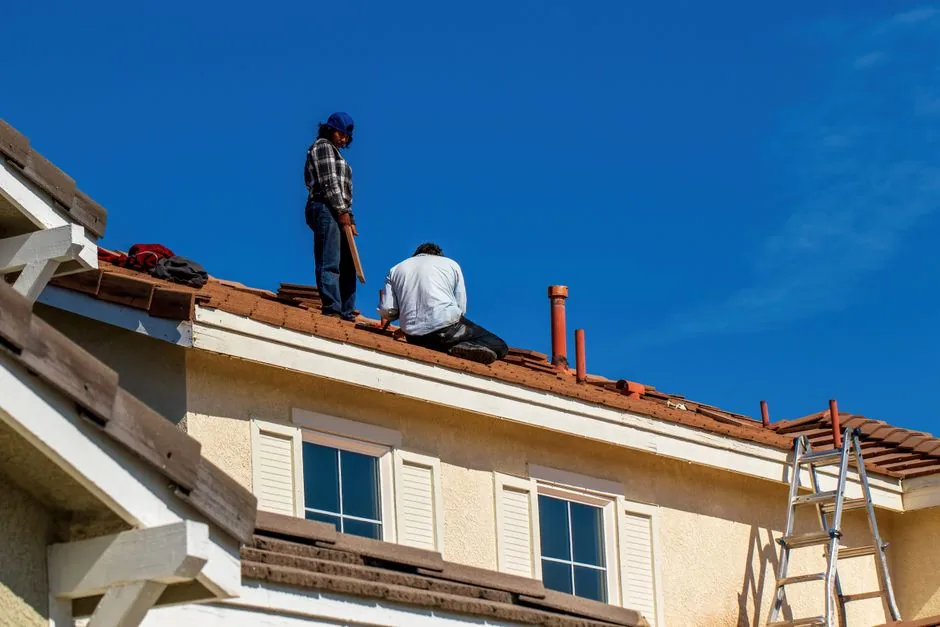
South Tempe's older neighborhoods near the Kyrene Corridor run heavy on concrete and clay tile, while newer East Valley subdivisions lean toward asphalt shingle. When a roof is old enough to need full replacement rather than another repair, the material question comes up fast — and the two options perform very differently under Arizona sun, dust storms, and monsoon wind.
This guide breaks down upfront cost, real lifespan under Arizona conditions, storm performance, maintenance, HOA considerations, and how the two other common Valley materials — metal and foam — fit into the decision, so the choice comes down to your actual situation rather than a generic recommendation.
Upfront cost
Shingle is the more affordable material to install. Asphalt shingle roof replacement in the Valley typically runs in the neighborhood of $4 to $6 per square foot installed, while tile — because of the material itself plus the labor to handle its weight — usually lands closer to $8 to $14+ per square foot depending on tile profile and roof complexity. On a typical single-family home, that's the difference between a mid-range shingle replacement and a tile job that can run two to three times as much upfront. Products from major manufacturers like CertainTeed and GAF span a range within each material category too — architectural shingle costs more than 3-tab, and premium tile profiles cost more than standard concrete tile.
In real dollar terms on a typical 1,500-2,000 sq ft single-family roof, that translates to roughly $6,000-$12,000 for a full shingle replacement versus $15,000-$30,000+ for full tile, depending on tile profile and roof complexity. Every number here is a planning range — an actual quote requires measuring the specific roof.
Lifespan in Arizona conditions
This is where the math changes. Concrete and clay tile itself can last 40 to 50+ years — the tile doesn't degrade from UV exposure the way asphalt does. What ages out on a tile roof is the underlayment beneath it, typically needing replacement every 20-25 years even though the tile on top is reused. Asphalt shingle, by contrast, typically needs full replacement after 15 to 20 years in Arizona's heat cycling, since UV exposure and 115°F+ summer surface temperatures dry out and crack the asphalt binder faster than in milder climates.
How each holds up to monsoon wind and hail
Shingle is more vulnerable to wind lift — gusts during a monsoon storm can peel back or fully remove shingles that have already started to dry out, which is why shingle repair calls spike every year right after the first big storms. Tile handles wind better once properly set, but individual tiles crack from hail impact or from debris knocked loose in high wind, which is the most common tile roof repair call we get after a storm.
Neither material is "better" across the board — tile costs more upfront and lasts longer with periodic underlayment work, shingle costs less upfront and needs full replacement sooner. The right call depends on how long you plan to own the home.
Cooling cost difference
Tile's raised profile creates an air gap between the tile and the roof deck, which measurably reduces heat transfer into the attic compared to shingle laid flat against the deck. It's not dramatic on its own, but combined with a reflective coating, it's a meaningful factor in summer cooling bills for homes that keep their AC running most of the day from May through September.
Weighing tile vs. shingle for your own roof? Get a free inspection and an honest recommendation.
Get a Free Roof InspectionOngoing maintenance
Shingle maintenance is mostly reactive — periodic inspection for granule loss and lifted edges, plus prompt repair after storms. Tile maintenance is lighter day-to-day since the tile itself is durable, but underlayment condition needs periodic professional checking since it's not visible without removing tile, and cracked or slipped individual tiles should be addressed quickly to protect the underlayment beneath them from sun and rain exposure. Neither material is genuinely low-maintenance in the sense of "install and forget" — both benefit from the same pre-monsoon inspection routine.
HOA and aesthetic considerations
In many Valley HOA communities, especially tile-dominant ones in parts of Scottsdale and Chandler, architectural guidelines specify approved roofing materials, tile profiles, or colors — meaning the material decision isn't always a free choice. Checking your HOA's architectural review process before finalizing a replacement plan avoids a rejected application partway through the decision, and a tile-color or profile match sometimes adds a short approval step even for a like-for-like replacement.
What about metal, foam, or flat?
Tile and shingle cover most Valley single-family homes, but they're not the only options. Standing seam metal costs roughly $9-$14 per square foot — between shingle and tile — with strong wind performance and a long service life, and it's becoming more common on newer and custom builds. Flat and foam roofing aren't really an alternative for a standard pitched residential roof, but they're the standard choice for additions, patios, and commercial buildings, typically running $5-$9 per square foot for spray foam with a protective coating.
Environmental and sustainability considerations
Tile's longer lifespan means fewer full tear-offs and less material going to landfill over a given ownership period, and concrete or clay tile is largely inert and often reusable in part after removal. Asphalt shingle has a shorter replacement cycle, and while recycling programs for old shingles exist in some markets, availability in the Valley varies. On the energy side, both materials benefit from a reflective coating, but tile's natural air-gap ventilation gives it a modest edge in reducing attic heat gain even without one.
Long-term cost: repair frequency over time
Upfront cost only tells part of the story. Over a 20-year ownership window, a shingle roof installed today will likely need full replacement once within that period given its 15-20 year lifespan, plus periodic isolated repairs along the way — typically $200-$2,500 each — for storm damage or wear. A tile roof installed today will likely still be on its original tile at the 20-year mark, needing underlayment work once in that window (commonly at the 20-25 year mark) rather than a full tear-off and replacement. Run the actual math for your specific timeline and the two paths often land closer together than the upfront price difference suggests.
Choosing a licensed installer
Whichever material you choose, installation quality affects performance as much as the material itself — a tile roof with poorly detailed underlayment or a shingle roof installed with the wrong nailing pattern will underperform its rated lifespan regardless of the material's inherent quality. Verifying a contractor's Arizona ROC license and asking for an itemized, written estimate — not a verbal number — are the two simplest steps that protect the investment either material represents.
Which one should you choose?
If you're planning to stay in the home 20+ years, tile's higher upfront cost usually pencils out over that time horizon, especially factoring in avoided full-replacement cycles. If you're renovating a rental property, flipping, or planning to move within a decade, shingle's lower upfront cost is often the more practical choice. Either way, get an actual roof replacement quote with itemized pricing before deciding — square footage, roof pitch, and how many layers are being torn off all move the number more than the material choice alone.
Getting quotes for both materials
If you're genuinely undecided, it's reasonable to ask for itemized pricing on both a shingle and a tile replacement for the same roof before committing — the actual numbers for your specific square footage, pitch, and complexity often clarify the decision faster than a general cost range does. A good inspection should walk through both options honestly, including how each performs given your home's specific exposure, orientation, and any HOA constraints, rather than steering toward whichever job is more profitable to install.
Tile and shingle across the Valley
The material mix varies by neighborhood more than by city line. Older, established areas of Tempe, Mesa, Scottsdale, and Phoenix run heavier on tile, while newer subdivisions in Chandler and Gilbert show more of a mix between tile and shingle depending on the builder and era. Ahwatukee and Guadalupe both have a real mix of roof ages and materials too — in all eight cities, the honest answer to "which material do I have" is usually a quick look at the roof itself rather than an assumption based on the city.
Final thoughts
The tile-versus-shingle decision comes down to time horizon and budget more than any single performance metric — both materials handle Arizona conditions well when properly installed and maintained. What matters most is getting an itemized quote for your specific roof, checking any HOA requirements up front, and picking the material that fits how long you actually plan to own the home.