The most common roof problems in Glendale, AZ homes are underlayment that dries out and cracks years before the tile or shingle above it fails, flashing that works loose around chimneys and vents, and wind- or dust-driven tile and shingle damage from summer storms — all accelerated by the West Valley’s combination of 100-plus days of triple-digit heat and monsoon wind events each year. As this year’s monsoon season winds down through late September, it’s a natural point for Glendale homeowners to check for storm-related damage before the drier, cooler months set in.
Why does underlayment fail first on Glendale roofs?
Underlayment is the water barrier sandwiched between the roof deck and the visible tile or shingle layer, and in Glendale it typically breaks down well before the surface material does. Direct UV exposure and repeated heat cycling — roof surface temperatures can exceed 160°F on summer afternoons and then drop 60-plus degrees overnight — dry out felt and older synthetic underlayments until they turn brittle and crack.
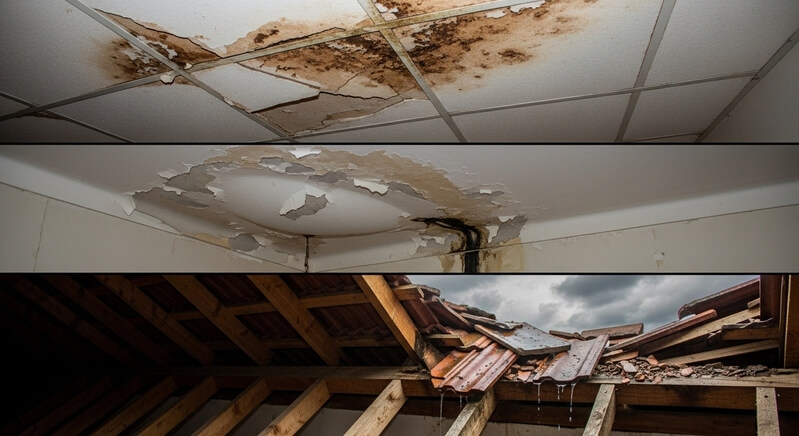
Once that barrier splits, a tile or shingle roof can look completely intact from the ground while water is already tracking into the attic during a monsoon downpour. This is one of the reasons a roof can pass a quick visual check and still leak the same season — the failure is happening in a layer nobody sees without a proper inspection.
What causes flashing leaks around chimneys and vents?
Flashing is the metal sealing the joints where a roof plane meets a chimney, skylight, vent pipe, or wall, and it is usually the first thing to fail under Glendale’s heat and wind stress. Metal expands and contracts with every triple-digit day, which slowly works fasteners loose and breaks the seal underneath.
Older step flashing that was sealed with tar or caulk instead of properly lapped under the roofing material is especially prone to this, since the sealant dries out and shrinks years faster than the metal itself. A gap here is a direct, unobstructed path for water straight into the attic and ceiling below.
How do monsoon winds damage shingles and tile?
Monsoon outflow winds, which regularly gust past 50-60 mph in the West Valley, get under the leading edge of a shingle or tile and lift it — and once one piece shifts or goes missing, the roof deck underneath is exposed and the surrounding pieces come loose much faster in the next storm. Asphalt shingles also shed their protective granules under sustained UV exposure, which shows up as fine dark grit collecting in gutters and downspouts.
Concrete and clay tile rarely crack from wind alone, but tile that has already slipped out of its interlock is far more vulnerable to being picked up and shattered against neighboring tiles during a wind event.
Does dust and debris from haboobs actually damage a roof?
Yes — a haboob’s wall of dust carries grit and small debris at high speed, which pits and thins granule coatings on shingles and can dent softer metal flashing and vent caps over repeated events. The bigger risk is usually what the wind carries with it: palm fronds, loose gravel from ballasted flat roofs, and branches that puncture or gouge the roofing surface on impact.
Homes near open desert washes or newer West Valley developments with less mature tree cover tend to see more of this debris-strike damage than homes in older, tree-lined neighborhoods.
| Problem | Usual cause | Typical repair cost range |
|---|---|---|
| Underlayment crack/tear | UV and heat cycling | $400 – $1,200 (localized) |
| Flashing failure | Thermal expansion, dried sealant | $250 – $800 per penetration |
| Wind-lifted shingles/tile | Monsoon outflow winds | $300 – $1,500 depending on area |
| Dust/debris strike damage | Haboob winds and airborne debris | $200 – $900 per spot repair |
Ranges are general guidance for the Phoenix-area market, not a quote — actual cost depends on roof material, pitch, and access.
Noticing granules in the gutter or a stain that wasn’t there last month?
Why does poor attic ventilation show up as a roof problem?
An attic that can’t vent hot air builds up temperatures well above outdoor air on summer afternoons, and that trapped heat bakes the underside of the roof deck and underlayment from below at the same time UV is baking it from above. Over several summers, that double heat load shortens the life of decking, adhesives, and underlayment noticeably faster than on a roof with adequate intake and exhaust venting.
It also raises cooling costs year-round, so a ventilation problem often shows up first as a utility bill complaint and only later as a roof-condition complaint once someone gets on the roof to look.
A typical scenario in Glendale looks like this: a homeowner notices a small ceiling stain after the season’s first big monsoon storm, assumes it is minor, and waits. By the time a roofer inspects it weeks later, what would have been a single flashing reseal has become a plywood deck repair, because the same gap kept admitting water through several more storms in between.
Repair or replace: how do Glendale homeowners decide?
A repair almost always makes sense when the damage is localized — one section of lifted tile, a single failed flashing point, or a small area of granule loss — and the rest of the roofing material still has useful life left. Replacement becomes the more cost-effective option once a roof has multiple, unrelated problem areas at once, since that pattern usually means the underlayment itself has reached the end of its service life across the whole roof, not just in the spots currently leaking.
A straightforward way to check which category a roof falls into: if an inspector finds problems in more than two or three separate areas during the same visit, ask directly whether a full or partial underlayment replacement would cost less over the next five years than repeated single-area repairs.
Frequently asked questions
What is the most common roof problem in Glendale, AZ?
Underlayment breakdown from prolonged heat and UV exposure is the most common root cause, though it often first shows up as a flashing leak or a lifted shingle or tile.
How often should a Glendale homeowner get a roof inspection?
Twice a year is standard for this climate — once before monsoon season in late spring and once after it ends in early fall — plus a spot check after any major wind or dust storm.
Can I wait until after monsoon season to fix a small roof leak?
It is not recommended. A small leak usually gets worse with each additional storm, and waiting through the rest of monsoon season risks turning a minor repair into a deck or insulation replacement.
Does homeowners insurance cover roof damage from a dust storm or monsoon wind?
Coverage depends on the policy and the specific damage, and often on whether the damage is documented promptly — see our detailed guide on homeowners insurance and roof damage in Arizona for what insurers typically require.
How long does roof flashing usually last in Arizona heat?
Metal flashing itself can last decades, but the sealant or mastic around it typically needs attention every 5-10 years in this climate, well before the flashing metal itself would need replacing.
Are tile roofs more resistant to monsoon wind than shingle roofs?
Individual tiles resist wind lift better than shingles once properly interlocked, but any tile that has already slipped is more vulnerable to cracking than a shingle in the same position, so the comparison depends heavily on the roof’s current condition.
What does granule loss on a shingle roof actually mean?
It means the protective mineral coating that shields the shingle from UV is wearing away, which accelerates aging and eventually leads to cracking and leaks if the roof isn’t recoated, repaired, or replaced.
Most Glendale roof problems trace back to the same two stresses — sustained heat and monsoon wind — so catching them early with a proper roof inspection is usually far cheaper than waiting for a leak to show up on a ceiling. If a recent storm already caused visible damage, our storm and monsoon damage repair team serves Glendale and the rest of the West Valley; you can also read more on how haboob debris damages a roof or when rusted flashing needs replacing rather than repair.
Glendale isn’t the only West Valley city with a new-build-versus-established mix — see our guide to roof inspection in Surprise, AZ, from new builds to Sun City Grand.
Getting ready for next year’s storms? See our West Valley monsoon roof prep checklist for Glendale, Peoria and Surprise.
Related reading: Emergency Roof Repair in Glendale, AZ: First Hours