
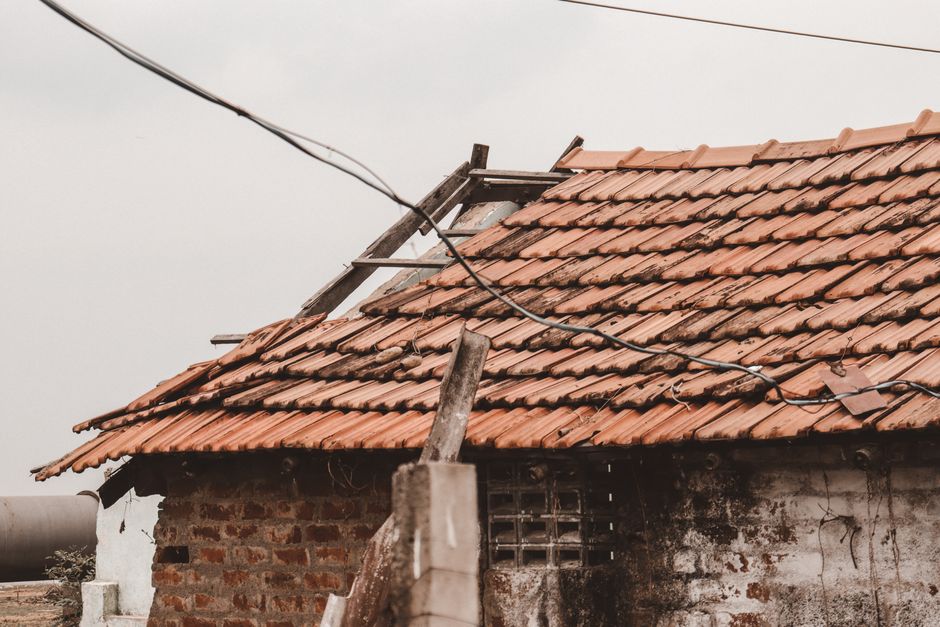
Tile slippage happens when the fasteners, battens, or foam adhesive holding roof tile in place fail, letting individual tiles shift out of alignment or slide down the roof slope — and it’s more than a cosmetic issue, since a slipped tile exposes the underlayment beneath it to direct sun and rain.
What causes tile slippage
Roof tile relies entirely on whatever’s holding it to the deck below — and in the East Valley, a few specific things wear that connection down over time:
- Deteriorated or failed fasteners. Nails and screws holding battens or tile can corrode or work loose over years of thermal expansion and contraction under Arizona’s heat swings.
- Foam adhesive breakdown. Foam-set tile systems rely on adhesive that can degrade with age and UV exposure, eventually losing its grip.
- Wind uplift during monsoon storms. Strong, gusty monsoon wind can work individual tiles loose over repeated storms, even without a single dramatic event.
- Foot traffic. Walking on tile roofs without knowing where it’s safe to step can crack tiles or knock them out of alignment, especially older or brittle tile.
- Batten rot. On older tile roofs using wood battens, moisture intrusion over years can rot the battens themselves, so even sound fasteners no longer hold.
Slippage often shows up in the same areas prone to other tile issues — see our guide on why roof valleys leak more than other areas, since valleys see more water flow and wind turbulence than flat roof planes.
Noticed a tile out of place?
Why a slipped tile is more than cosmetic
Tile itself is largely a weather shield — the actual waterproofing on most tile roofs comes from the underlayment beneath it. When a tile slips, cracks, or falls away, that underlayment is left exposed to direct UV and rain with no protective covering. Underlayment isn’t designed for that kind of direct, prolonged exposure, and a gap that goes unnoticed for months can turn a simple tile reset into an underlayment repair, or worse, a leak that’s already reached the roof deck.
How to spot tile slippage from the ground
- Uneven rows or gaps. Tile that’s shifted out of its neat, uniform pattern is often visible from the street, especially when comparing one row to the rows around it.
- Visible dark patches. Exposed underlayment or decking under a missing or shifted tile often shows as a darker patch against the surrounding tile color.
- Tile debris in gutters or on the ground. Small tile fragments after a storm can indicate slippage or cracking happening somewhere on the roof, even if you can’t see exactly where from ground level.
Binoculars can help confirm suspected slippage without needing to get on the roof yourself, but a proper inspection is the only way to catch slippage that isn’t obvious from the ground.
Nailed vs. foam-set vs. wire-tied tile
| Fastening method | Typical failure mode | Repair approach |
|---|---|---|
| Nailed to battens | Nail corrosion or batten rot over decades | Re-nail sound battens, replace rotted ones |
| Foam-set | Adhesive breakdown from age and UV exposure | Re-adhere with fresh foam, or switch to mechanical fastening if recurring |
| Wire-tied | Wire fatigue or corrosion | Replace wire ties, check surrounding tile for similar wear |
How tile slippage actually gets fixed
- Inspect the underlayment beneath the affected tile. Before resetting anything, it’s worth confirming the underlayment underneath hasn’t already been damaged by exposure.
- Match replacement tile to the existing profile. Cracked or broken tile is replaced with matching tile rather than mismatched pieces, keeping the roof’s appearance and weather protection consistent.
- Re-secure with the appropriate fastening method. Depending on the original system (nailed, foam-set, or wire-tied), the repair uses matching or improved fastening to prevent the same failure from recurring.
Our tile roof repair team handles both individual slipped-tile resets and broader underlayment repair when slippage has gone unnoticed long enough to expose it to the elements.
A real-world scenario
A homeowner in Scottsdale noticed a few tiles looked slightly out of line after a windy monsoon storm but assumed it was a minor cosmetic issue not worth addressing right away. Several months later, during the next storm, water started coming through the ceiling in that same area. An inspection found that one of the “slightly out of line” tiles had actually slipped enough to fully expose a section of underlayment, which had since cracked under repeated sun exposure. What would have been a simple tile reset became an underlayment repair — a good example of why even minor-looking slippage is worth a look sooner rather than later.
Frequently asked questions
Is a slightly out-of-place tile urgent?
It’s not usually an emergency, but it shouldn’t be ignored either. A slipped tile exposes the underlayment beneath it to direct weather, and that exposure gets worse the longer it goes unaddressed.
Can I fix a slipped tile myself?
Walking on tile roofs without knowing safe step zones risks cracking additional tiles, so this is generally best left to a professional, especially since a proper fix also means checking the underlayment beneath the slipped tile.
Why does tile slip more after monsoon season?
Wind uplift during monsoon storms is one of the more common causes of tile slippage, and repeated storms over a season can work already-marginal fasteners loose even if no single storm looked dramatic.
How much does it cost to fix slipped roof tile?
It depends on how many tiles are affected and whether the underlayment beneath them also needs repair. A simple tile reset costs far less than a slippage issue that’s already led to underlayment damage.
Does tile slippage mean I need a full roof replacement?
Usually not. Tile slippage is typically a localized repair — full replacement is more relevant when a large percentage of tiles are affected or when the tile itself has reached the end of its lifespan.
Can slipped tile cause a leak even without visible cracks?
Yes. A tile doesn’t need to crack to cause problems — simply shifting out of position can expose the underlayment beneath it, and that exposure alone can eventually lead to a leak even with intact tile.
If you’ve spotted tile that looks out of place, our tile roof repair service can confirm whether it’s a simple reset or something that’s already reached the underlayment. For anything storm-related, our storm and monsoon damage team also handles wind-related tile issues after major weather events. Request a free inspection to get a definitive answer either way. Shingle roofs show wear differently than tile — see our guide on granule loss on shingles if you have a mixed-material property or are comparing what aging looks like across roof types.
Lifted or shifted tiles aren’t always weather-related, either — nesting birds are a common cause of the same symptom. Our guide on bird and pest damage to roofs covers how to tell the difference. Tile itself resists UV well, but the underlayment beneath it doesn’t — our UV degradation timeline for Arizona roofing materials explains why underlayment failure, not the tile, is usually the real clock running out.
Satellite dish mounting brackets are a common cause of this kind of point-load tile cracking, too — our guide on satellite dish removal: roof damage to watch for covers what to check if your roof has an old mount left behind.
Solar panel racking feet cause the same kind of point-load cracking when a crew walks a tile roof without care during installation—see our guide to solar panel installation and roof puncture risks for what to check.