
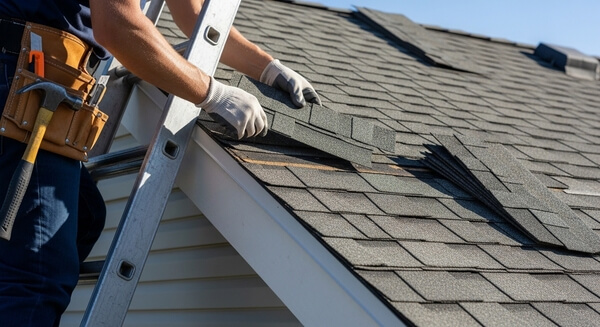
UV degradation on an Arizona roof follows a predictable, material-specific timeline: asphalt shingles typically show measurable granule loss and brittleness within 8-12 years, foam roof coatings need recoating every 3-5 years to stay UV-protected, factory-finish metal panels start chalking and fading around 15-20 years, and concrete or clay tile itself can outlast the sun almost indefinitely — but the underlayment beneath the tile usually fails from UV and heat long before the tiles do. Knowing which timeline applies to your roof is the difference between recoating on schedule and discovering the damage as a leak.
Why Arizona sun is uniquely hard on roofing
Tempe and the East Valley sit at low desert elevation with very little cloud cover most of the year, so roofs absorb a UV dose most manufacturer warranties weren’t written around. A dark shingle or foam-coated flat roof can reach surface temperatures well over 150°F on a summer afternoon, then cool sharply overnight, day after day for months. UV breaks down the chemical bonds in asphalt, foam, and synthetic underlayments directly, while the daily heat-cool cycling adds a second stress that makes materials expand and contract until they crack or lose flexibility faster than UV exposure alone would predict. Monsoon season then adds a third factor: wind-driven rain finds every weak point the sun created over the preceding dry months, which is why storm and monsoon damage so often shows up on roofs that already had hidden UV wear.
UV degradation timeline by roofing material
Every common roofing material handles UV differently, and the weak link isn’t always the material homeowners assume — some surfaces are damaged directly by the sun, while others sit on top of a component that isn’t UV-stable. The table below is a general guide, not a guarantee; actual results depend on roof color, slope, ventilation, and maintenance history.
| Material | Primary UV damage mechanism | Visible signs | Typical recoat/replace interval |
|---|---|---|---|
| Asphalt shingles | UV breaks down asphalt binders; granules shed, exposing the mat | Bald patches, curling edges, brittleness | 15-20 years to replacement |
| Concrete/clay tile | Tile itself is largely UV-stable; underlayment beneath it is not | Faded glaze; leaks trace to underlayment | Underlayment 20-30 yrs; tile 40-50+ yrs |
| Foam roof coating (SPF) | UV directly degrades the elastomeric topcoat over the foam | Chalking, hairline cracking, discoloration | Recoat every 3-5 years |
| Standing-seam metal | UV fades and chalks the factory paint finish; substrate is stable | Gradual color fade, chalky hand-wipe residue | Refinish/recoat 15-20+ years |
| Flat roof membrane (TPO/mod-bit) | UV embrittles the membrane surface and seams | Surface cracking, seam lifting, granule loss | 10-20 years depending on membrane |
Asphalt shingles: the granule-loss clock
Shingles use ceramic-coated granules embedded in an asphalt mat specifically to block UV from reaching the asphalt underneath. That layer works, but it wears — every year of Arizona sun knocks loose a small percentage of granules, and once bald spots appear, the exposed asphalt degrades faster than the surrounding shingle. Meaningful granule loss typically shows up in the 8-12 year range on south- or west-facing slopes first, since those take the harshest afternoon sun. As the mat grows brittle, shingles lose their ability to flex with heat cycling and start curling or cracking — see our posts on granule loss on shingles and blistering shingles for more. A UV-brittle roof is also far more vulnerable to wind uplift during monsoon storms, since brittle tabs crack instead of flexing. If your shingle roof is past 15 years, a UV-focused inspection before monsoon season is worth scheduling even if nothing looks wrong from the ground.
Tile roofs: it’s the underlayment, not the tile
Concrete and clay tile are among the most UV-resistant roofing materials available — the tile itself is basically inert to sunlight and can look fine for 40+ years. That durability is also what misleads homeowners: the underlayment beneath the tile, which does the actual waterproofing, absorbs radiant heat between the tile above and a hot roof deck below without any direct airflow to cool it, and older felt-based underlayments become brittle and crack well before the tile shows wear. This is the mechanism behind most of what we cover in tile slippage — a tile shifts from impact or foot traffic, but the leak that follows usually traces back to underlayment that had already lost its flexibility. Because the failure is invisible until water gets through, periodic tile roof inspections that lift sample tiles to check underlayment condition are the only reliable way to catch this early.
Foam roof coatings: the shortest UV cycle
Spray polyurethane foam (SPF) roofing is popular on flat and low-slope Valley roofs because it insulates well and can be recoated indefinitely — but its protective topcoat has the shortest UV lifespan on this list. The foam itself isn’t UV-stable; it’s the elastomeric topcoat over it that blocks sunlight, and that coating is a wear layer by design. Under Arizona sun, a foam coating typically needs recoating every 3 to 5 years. Skip that and the coating chalks, thins, and cracks, letting UV reach the foam and break it down directly — see why foam roof coatings crack and blister for the failure mechanism. A foam roof kept on schedule can perform well for 20-30 years total, but only if the recoat happens on time — an overdue foam roof is one of the more common causes of surprise leaks on flat roofs.
Not sure where your roof falls on the UV timeline?
Metal roofing: slow fade, but not immune
Standing-seam and other painted metal systems hold up to Arizona UV better than almost anything else on the market — the metal substrate doesn’t degrade from sunlight at all. What ages is the factory paint finish, which fades and chalks gradually over 15-20+ years of full sun. Chalking shows up as a powdery residue that transfers to your hand on contact, signaling the paint’s UV protection is thinning, not a structural problem. Because the panel itself is stable, metal roof UV maintenance is mostly cosmetic until the finish is badly compromised, at which point refinishing protects the paint system rather than the roof’s waterproofing.
Flat and low-slope membranes
TPO, modified bitumen, and other membrane systems sit fully exposed with nothing overhead to shield them, so UV hits the surface directly every day. Lighter TPO membranes reflect more heat and generally outlast dark modified-bitumen cap sheets, but both eventually show surface cracking, seam lifting, and — on granulated cap sheets — the same granule loss shingles experience. Flat roofs also collect standing water more easily than sloped ones, and UV-embrittled seams are frequently where ponding water finds its way through. Most quality membranes are rated for 10-20 years, and a flat roof nearing that window benefits from the same proactive inspection tile and foam roofs need.
How to slow UV damage on any roof type
You can’t stop UV exposure in the Sonoran Desert, but you can slow how fast it degrades your roof. Reflective “cool roof” coatings reduce surface temperature and slow both UV breakdown and heat-cycling stress, which is why roof insulation and coating upgrades pay for themselves over a roof’s life, not just in energy bills. Attic ventilation matters too — a poorly ventilated attic traps heat against the underside of the deck, accelerating degradation from below while UV works from above. And because UV damage is gradual and often invisible until it causes a leak, the single most effective step is keeping to a regular roof inspection schedule rather than waiting for a stain to appear — our guide on how often to get a roof inspection breaks down recommended intervals by roof type, most of which track closely with the UV timelines above.
A common Tempe scenario
A typical case: a 14-year-old shingle roof on a west-facing slope in Tempe has weathered fourteen monsoon seasons with no major storm damage, so it’s never been flagged for anything beyond routine gutter cleaning. During a pre-monsoon inspection, the west slope shows noticeably thinner granule coverage than the shaded north slope, and a few shingles crack rather than flex when lifted for a closer look. Nothing is leaking yet, but the roof has used up the margin it once had to shed wind-driven rain from a strong monsoon cell. Replacing just the worst slope isn’t practical for matching or warranty reasons, so the homeowner plans a full replacement on a schedule instead of reacting to an emergency — generally the better and cheaper outcome.
Frequently asked questions
How much faster does UV degrade roofing in Arizona than in milder climates?
There’s no single multiplier, but the combination of high UV index, minimal cloud cover, and extreme daily heat cycling means most materials show UV wear noticeably earlier here than in a cooler, cloudier climate — part of why local contractors often recommend shorter maintenance intervals than a product’s general warranty guidance assumes.
Can I tell how much UV damage my roof has just by looking from the ground?
Only roughly. Fading and obvious granule loss are visible on shingle roofs, and chalking is sometimes visible on metal, but underlayment failure on tile roofs and early foam coating breakdown usually require a closer inspection to spot.
Does roof color affect how fast UV damages it?
Yes. Darker surfaces absorb more solar heat and run hotter, accelerating both direct UV breakdown and heat-cycling stress. Lighter or reflective surfaces, including cool-roof coatings, stay cooler and generally age more slowly, though color doesn’t eliminate the exposure.
Is UV damage covered by roofing warranties?
It depends on the product and manufacturer. Many warranties cover material defects but exclude or limit coverage for gradual weathering, since some UV wear is considered normal aging. See our guide on whether insurance covers roof damage for how that’s handled separately from warranty coverage.
Does UV damage make a roof more vulnerable during monsoon season?
Yes. UV-brittle shingles crack instead of flexing under wind load, degraded foam coatings crack and let water in at the first heavy rain, and UV-weakened membrane seams commonly fail during wind-driven storms. Much of what looks like sudden monsoon damage is UV damage that finally met a storm strong enough to expose it.
How often should I have my roof checked for UV wear specifically?
An annual inspection that includes a weathering check is a reasonable baseline for most Arizona roofs, ideally scheduled before monsoon season. Foam-coated roofs should be checked against their 3-5 year recoat schedule specifically, since that clock runs faster than general inspection intervals.
Can UV-damaged roofing be repaired, or does it always need replacement?
It depends on how far the degradation has progressed. Foam coatings can simply be recoated if caught before the foam underneath is compromised, and localized shingle or tile damage can sometimes be repaired section by section. Once UV damage is widespread, repair becomes a series of patches rather than a real fix, and replacement is the more cost-effective path.
Do skylights and roof penetrations age faster from UV than the rest of the roof?
Often, yes — the flashing and sealant around penetrations take direct sun exposure without the layered protection of a shingle mat or foam substrate, which is part of why penetration points are frequent leak sources. See our article on skylight leaks for more on that failure pattern.
UV exposure affects every roof type in Tempe and the East Valley the same way: slowly, invisibly, and on a schedule that’s easy to ignore until a monsoon storm exposes the damage all at once. If you’re not sure where your roof sits on its material’s UV timeline, a professional inspection can tell you whether you’re looking at years of service left or a replacement worth planning for. Either way, catching UV wear on your schedule beats discovering it on the storm’s.
Beyond gradual UV breakdown, a sudden monsoon downpour hitting a sun-baked roof can also cause thermal shock cracking — a faster, mechanical form of damage worth knowing the difference from.