
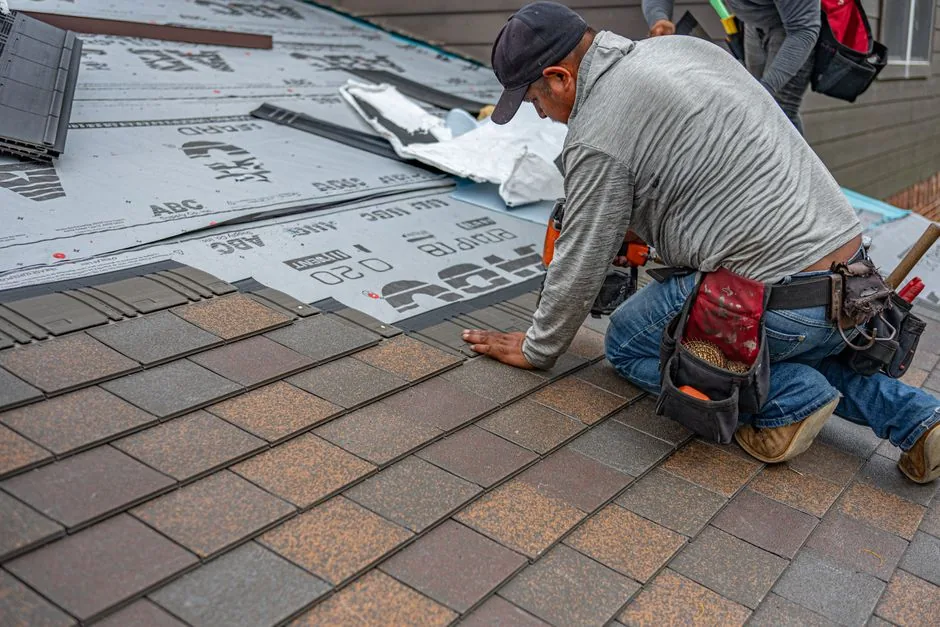
Homeowners insurance in Arizona covers roof damage when it's sudden and specific, like wind, hail, or fire, but it does not cover damage from age, sun exposure, or deferred maintenance. That distinction decides almost every claim outcome, and most denials trace back to a homeowner not documenting the cause clearly before filing. Here's exactly what's covered, what isn't, and how to file a claim the right way the first time.
What's covered vs. not covered
Most Arizona homeowners policies are written on an "open perils" or "named perils" basis, and roof damage is judged against that language. Coverage generally applies when damage traces to a specific, sudden event:
- Wind damage — shingles or tiles torn loose, lifted flashing, or debris impact during a monsoon outflow or dust storm.
- Hail damage — bruised or cracked shingles, dented metal, or fractured tile from a hailstorm.
- Fire damage — burned or heat-damaged roofing materials, including from a nearby structure or wildfire ember.
- Falling objects — a tree limb or debris strike during a storm.
Coverage typically does not apply when the cause is:
- Normal wear and age — curling shingles, brittle underlayment, or granule loss from years of UV exposure.
- Poor maintenance — a leak that developed because damage went unrepaired for months or years.
- Manufacturer defect — usually a warranty matter with the manufacturer, not an insurance claim.
- Flood or ground-level water intrusion — requires separate flood insurance in most cases.
This is the same line every insurer draws, and it's why a documented inspection matters before anything else — it establishes, in writing, whether damage looks sudden or gradual.
Covered vs. denied: quick reference table
| Scenario | Usually covered | Usually denied |
|---|---|---|
| Monsoon wind tears off shingles | Yes, sudden wind event | — |
| Hail dents a metal roof | Yes, sudden weather event | — |
| Roof leaks after 20 years, no storm involved | — | Yes, treated as age/wear |
| Cracked tile from a fallen tree limb in a storm | Yes, sudden impact | — |
| Slow leak ignored for a year, now causing interior mold | — | Yes, treated as neglect |
| Sun-cracked underlayment on a 22-year-old shingle roof | — | Yes, treated as wear |
Not sure which side of that line your damage falls on?
Get a Free Documented InspectionHow to file a roof insurance claim in Arizona
- Document the damage immediately. Take dated photos from the ground, and note the date and cause (specific storm, date of hail, etc.).
- Prevent further damage. If there's an active leak, arrange emergency tarping — most policies reimburse reasonable costs to prevent additional loss, so keep every receipt.
- Get a professional inspection before calling your insurer. A written report from a licensed roofer documenting cause and scope gives you an independent record before the adjuster's visit.
- Contact your insurer to open the claim. Report the date of loss, the cause, and request a claim number. Ask what your deductible is for this specific type of loss.
- Meet the adjuster on-site. Walk the roof with them if possible, and have your contractor's report and photos ready to reference.
- Compare the adjuster's estimate to your contractor's estimate. If there's a meaningful gap, that's the point to raise questions or request a reinspection before accepting the payout.
- Schedule the repair or replacement once the claim is approved, using a licensed contractor of your choosing.
Documentation that actually strengthens a claim
Adjusters see hundreds of roof claims a season, and the ones that move quickly share a pattern: clear photos, a specific date, and a professional's written cause-of-damage assessment. Useful documentation includes:
- Wide and close-up photos of every damaged area, taken as soon as possible after the event.
- The specific date of the storm or event (cross-referenced against local weather records if needed).
- A written inspection report from a licensed roofer stating likely cause, extent, and whether the damage is isolated or affects the whole roof system.
- Receipts for any emergency mitigation, like tarping, already completed.
- Prior maintenance records, if available, showing the roof was in reasonable condition before the event.
Common reasons claims get denied
Most denials aren't random. They tend to fall into a short list of avoidable patterns:
- No clear link to a specific event. "The roof started leaking" without a storm date reads as gradual wear, not a covered loss.
- Damage reported too long after it happened. Delayed reporting makes it harder to prove the cause was sudden rather than accumulated.
- Pre-existing damage. If an inspection shows the roof was already compromised before the claimed event, the insurer may attribute some or all of the damage to that prior condition.
- Roof age exceeding policy limits. Some policies apply different terms, or decline certain coverage types, on roofs past a set age.
- Missing documentation. A verbal description without photos or a written report is the weakest possible claim file.
Actual cash value vs. replacement cost coverage
How much a claim actually pays depends heavily on which of these two coverage types applies to the roof specifically, since some insurers write roofs differently than the rest of the dwelling once they pass a certain age:
- Replacement cost value (RCV): pays what it costs to replace the roof with similar new materials, no deduction for age or wear.
- Actual cash value (ACV): pays replacement cost minus depreciation, which can mean a noticeably smaller payout on an older roof.
Checking which one applies to your policy before a loss happens, not after, is one of the highest-value five-minute phone calls a homeowner can make. If your roof is nearing the age where a carrier might apply ACV terms, that's also a signal worth pairing with a proactive inspection to catch problems before they become disputed claims.
Public adjuster vs. going direct
Most straightforward claims don't need a public adjuster. It's worth considering one when a claim is denied outright, when the insurer's payout is well below a licensed contractor's documented estimate, or when the loss is large and complex — a public adjuster works for the homeowner, not the insurance company, in exchange for a percentage of the settlement. For a routine wind or hail claim with clear documentation, going direct with your insurer and a solid contractor report is usually enough.
How long a claim actually takes
A well-documented claim with a clear cause typically moves from filing to approved payout in two to six weeks. Claims take longer when there's a dispute over cause, when a public adjuster is involved, or when the loss involves a high-value tile roof requiring specialty materials. Emergency tarping and mitigation work can usually proceed immediately, without waiting for the claim to fully resolve, as long as it's documented.
Checklist before you call your insurer
- ☐ Photos taken from the ground, dated, covering all visibly damaged areas
- ☐ Specific date and cause identified (which storm, which event)
- ☐ Any active leak tarped or mitigated, with receipts saved
- ☐ Written inspection report from a licensed roofer in hand
- ☐ Policy reviewed for RCV vs. ACV roof terms and deductible amount
- ☐ Prior maintenance records gathered, if available
Filing a claim vs. paying out of pocket
| Factor | Filing a claim fits | Paying out of pocket fits |
|---|---|---|
| Cause of damage | Clear storm, hail, or fire event | Age, wear, or minor cosmetic issue |
| Repair cost vs. deductible | Cost well above the deductible | Cost close to or below the deductible |
| Claim history | First or infrequent claim | Multiple recent claims already filed |
Final thoughts
The line between a covered claim and a denied one almost always comes down to documentation and cause, not the size of the damage. A dated photo record, a written inspection report, and prompt reporting turn a roof claim into a straightforward process instead of a drawn-out dispute. When in doubt about which side of that line your roof falls on, a free inspection settles it before you make the call to your insurer, not after.